
I’d travelled all the way to Ladakh (If you haven’t read chapter 1, you are missing out!) believing the mountains would be the highlight – I wasn’t entirely wrong. The memories that stayed with me weren’t always standing on top of a famous pass or reaching another destination. They were hidden in quiet river valleys, empty roads, shared laughter, wrong turns, and sunsets I almost missed. This is the part of the story where the journey became more than just a route on a map.
June 2 — Leh to Nubra Valley
Unlike the previous two mornings, today didn’t begin on the road – It began with waiting. We had been asked to be ready by 9:30 in the morning, so everyone geared up early, packed their luggage and waited outside the hotel.
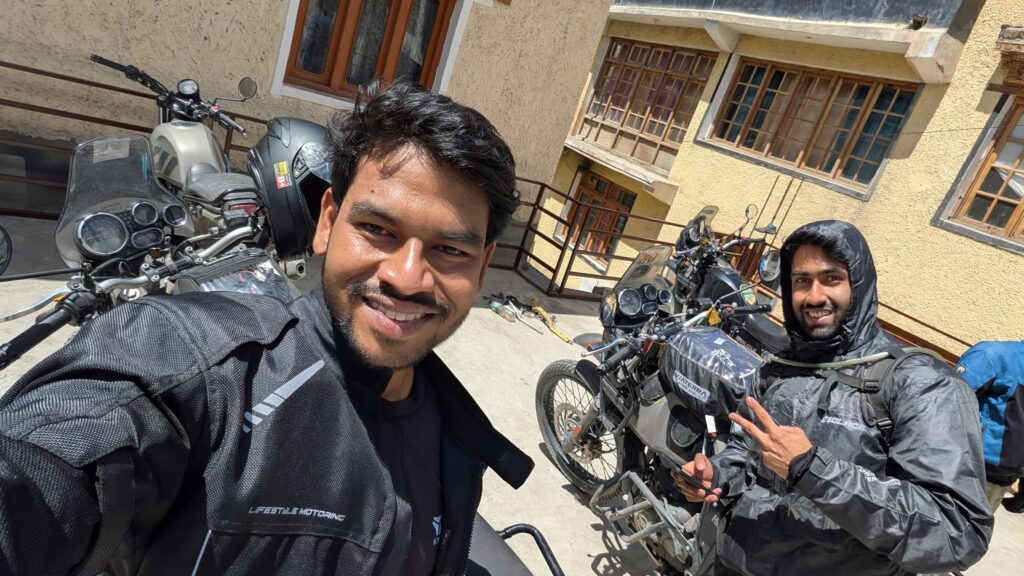
Operational delays pushed our departure further and further until we finally rolled out of Leh close to 11:30. Normally, that wouldn’t have bothered me much, except Leh had a surprise waiting for me.
For a place surrounded by some of the highest mountains in the world, it was unexpectedly hot. The thermometer hovered somewhere around 30°C and standing under the sun in full riding gear quickly became an endurance challenge of its own.
The higher regions of Ladakh had spoiled me with their cool breeze. Leh felt more like a regular city. Being fully geared up, every extra minute of waiting felt twice as long. By the time the engines finally came alive, I don’t think anyone in the group was happier than me. Today, we were riding to Nubra Valley.
Leh from top
Before heading towards the mountains, there was one familiar ritual – Fuel. Once everyone’s tanks were topped up, we finally left Leh behind.
The first few kilometres were surprisingly dusty, and for a brief moment I thought this was going to be one of those rough offroad sections. Then, almost as if on cue, perfect tarmac appeared.
Classic BRO.
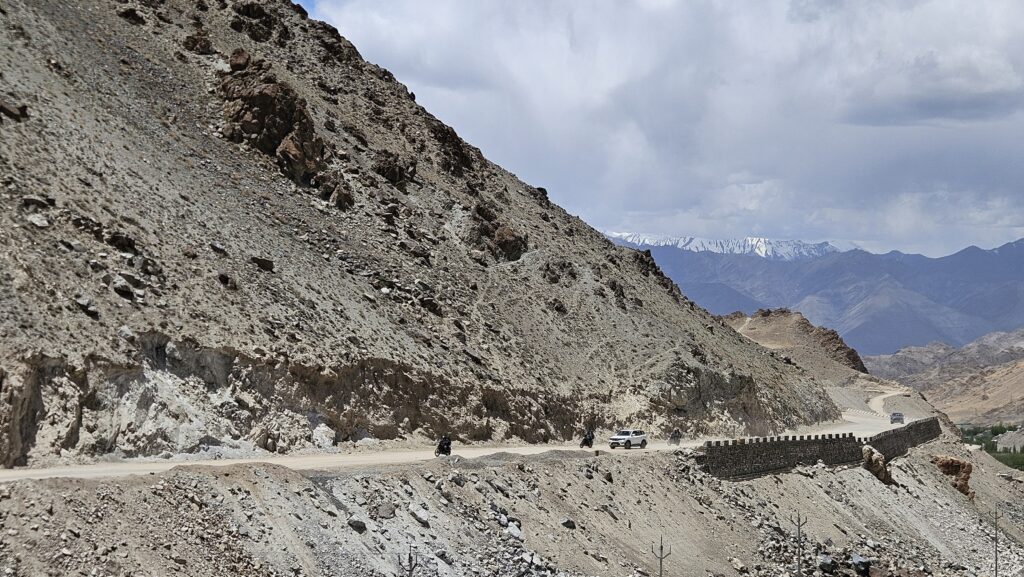
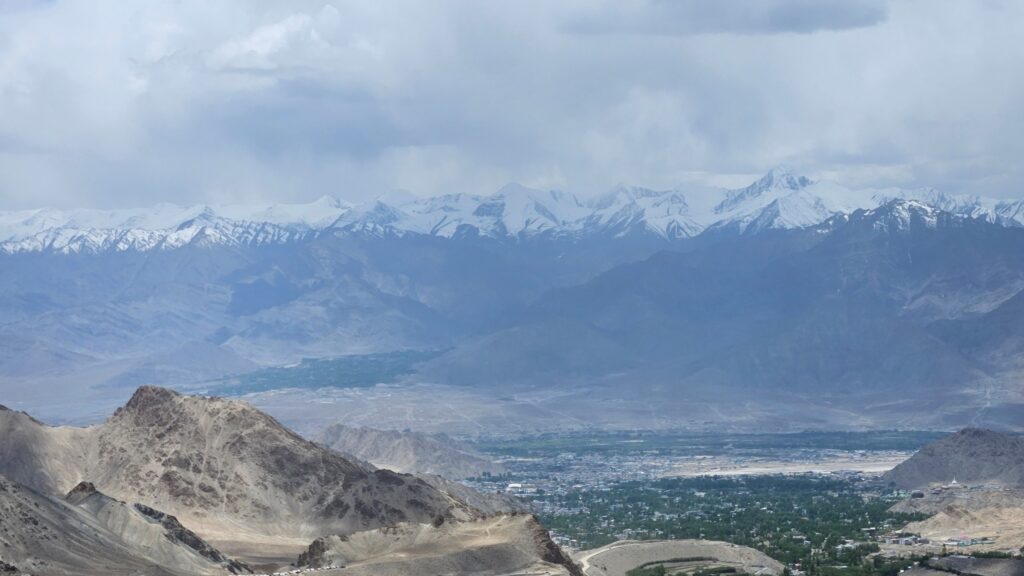
Not long after, we reached the Leh View Point. Looking down from there, the city almost looked misplaced. A thriving settlement, neatly tucked into what felt like a giant stone bowl, surrounded on all sides by barren Himalayan walls.
From above, Leh somehow looked both fragile and invincible. Tiny against the mountains, yet perfectly at home among them.
We spent some time clicking photographs before our new ride lead gathered everyone together.
Since our previous lead would no longer be accompanying us, this was our introduction to the person who would guide us through the remaining days of the expedition.
He taught us a few simple hand signals that riders use to communicate while on the move. Small things, but incredibly useful once the roads become long and conversations become impossible.
The Road to Khardung La
The climb towards Khardung La began gently. Then, the air started changing – the breeze became cooler, then colder. Soon enough, every breath felt just a little heavier than the previous one.
Snow slowly crept closer to the roadside. The mountains grew harsher, the horizon stretched further.
And somewhere during that climb, a thought quietly crossed my mind – there are people across the world who dream of experiencing places like this just once in their lives. Today, I was one of the lucky ones.
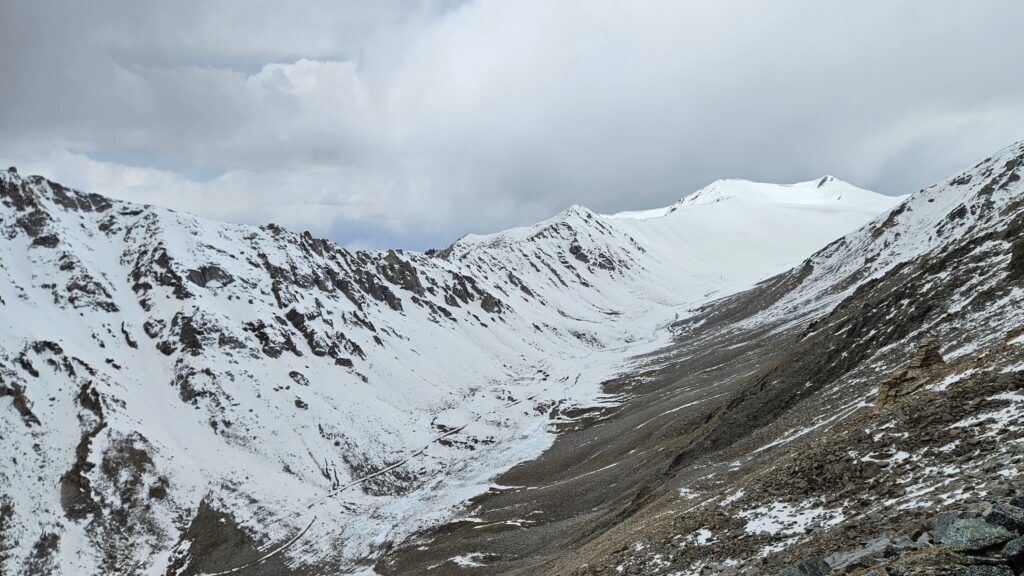
By the time we reached Khardung La, I had crossed another milestone—17,582 feet.
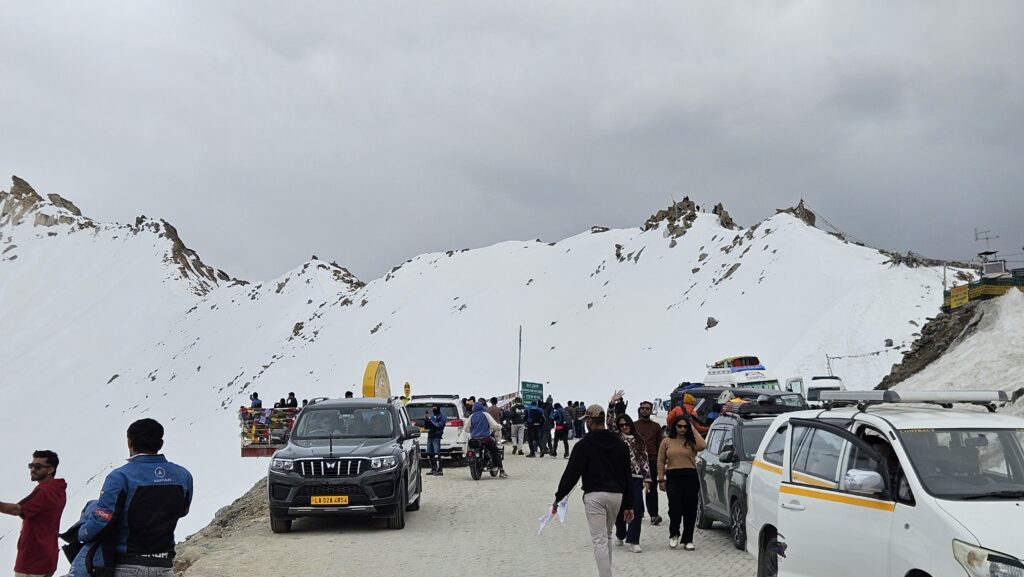
One of the highest motorable passes on Earth. I wish I could tell you my strongest memory of Khardung La was the altitude. It wasn’t. It was the crowd.
Just like Baralacha La, people were packed around the famous milestone, waiting impatiently for their turn to click a photograph. Somehow, the noise completely drowned out the place itself. I walked away.
A little lower down the road, I found an empty patch overlooking the mountains and simply sat there. From where I was sitting, I could still see the pass far above. The crowds had become tiny dots.
The mountains hadn’t changed, the altitude hadn’t changed – only the noise had disappeared. And suddenly, the place felt like Khardung La again, to me.
For me, places like these deserve more than a quick photograph. They deserve a few quiet minutes. Just you, and the mountain.
Riding Beside the Shyok
The descent towards North Pullu was pure joy. The roads were unbelievably smooth and for long stretches we comfortably cruised through sweeping bends at speeds I hadn’t imagined possible in terrain like this.
Then a river appeared beside us. I appeared wide and powerful, but gave off a calm feeling. I didn’t know it then, but this was the legendary Shyok River.
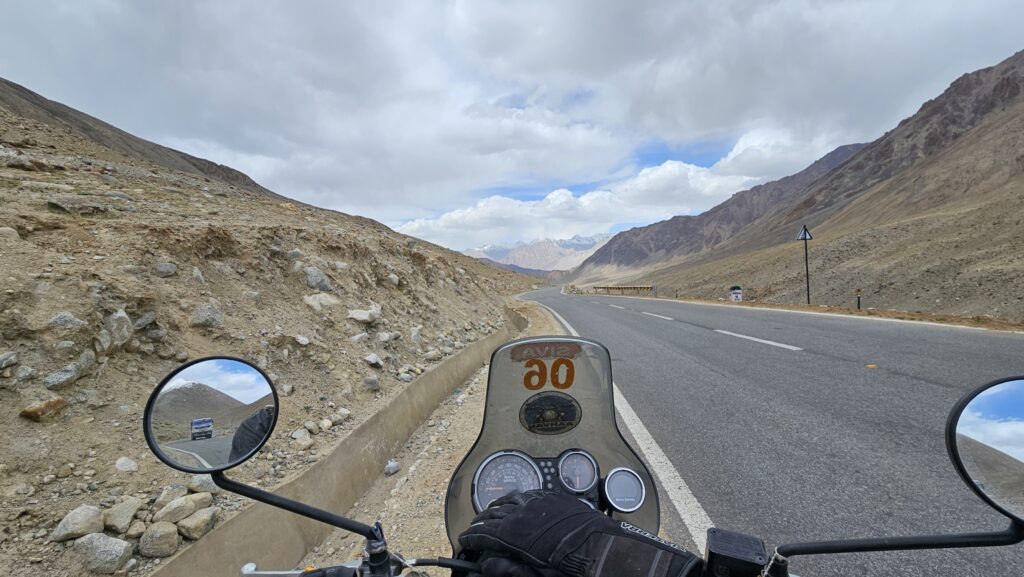
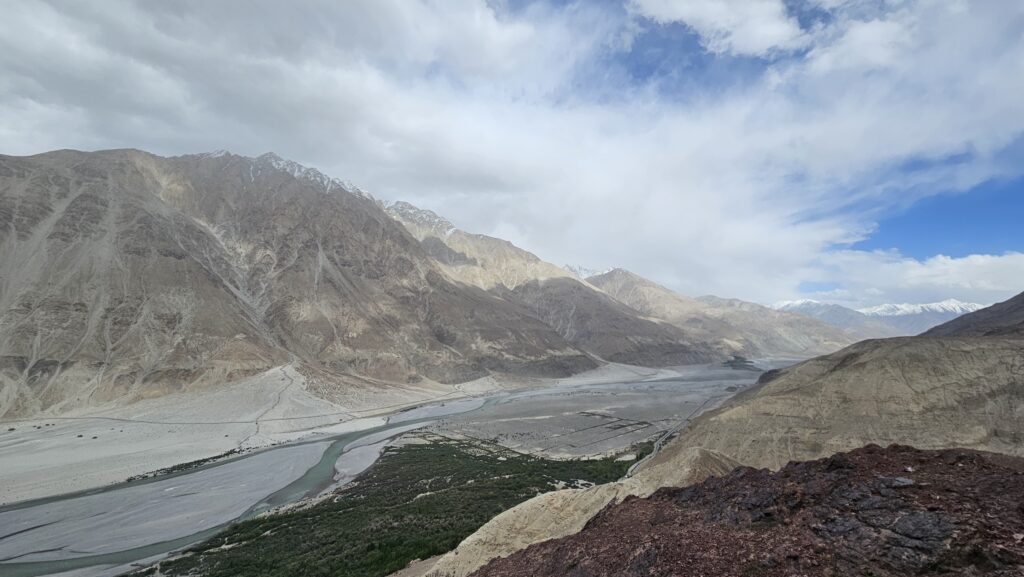
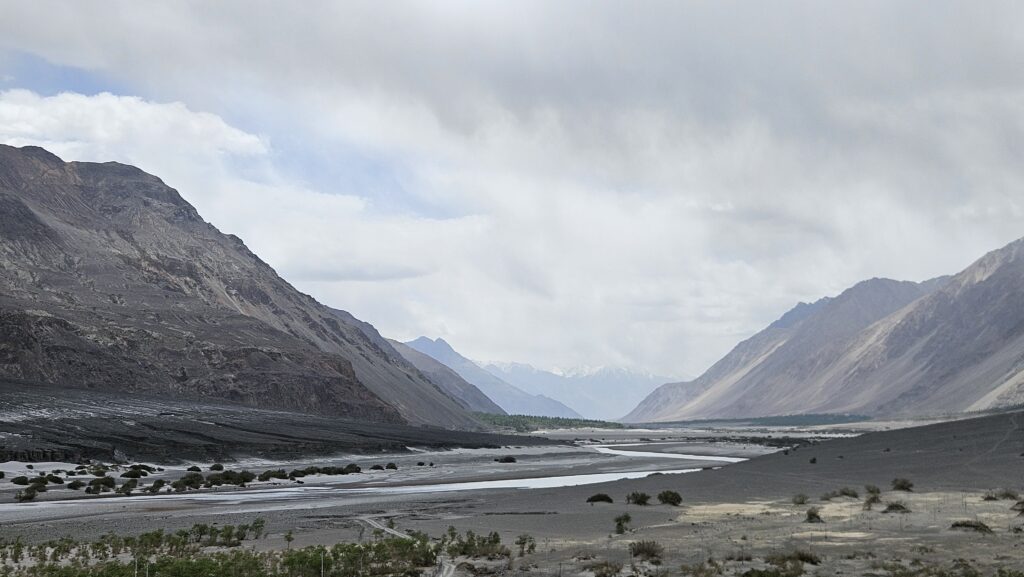
The river carved its way through an enormous valley while mountains rose dramatically on either side, creating one of those landscapes that almost seem too perfectly composed.
Lunch awaited us at Khalsar, a small village roughly twenty kilometres before Nubra.
One thing became immediately clear. Food in this part of Ladakh wasn’t cheap. By the time lunch was over, my wallet had definitely noticed.
What I didn’t know was that the most memorable twenty kilometres of the day were still ahead.
The Landscape That Wouldn’t let me Ride
I had seen photographs of Nubra Valley before. Hundreds of them. I thought I knew what to expect. I couldn’t have been more wrong.
The first glimpse hit me like a wave. The mountains rolled endlessly into the horizon, each carrying a different shade depending on how sunlight touched its surface. The Shyok sparkled below. Clouds drifted lazily overhead, opening and closing patches of light across the valley like nature was directing its own spotlight.
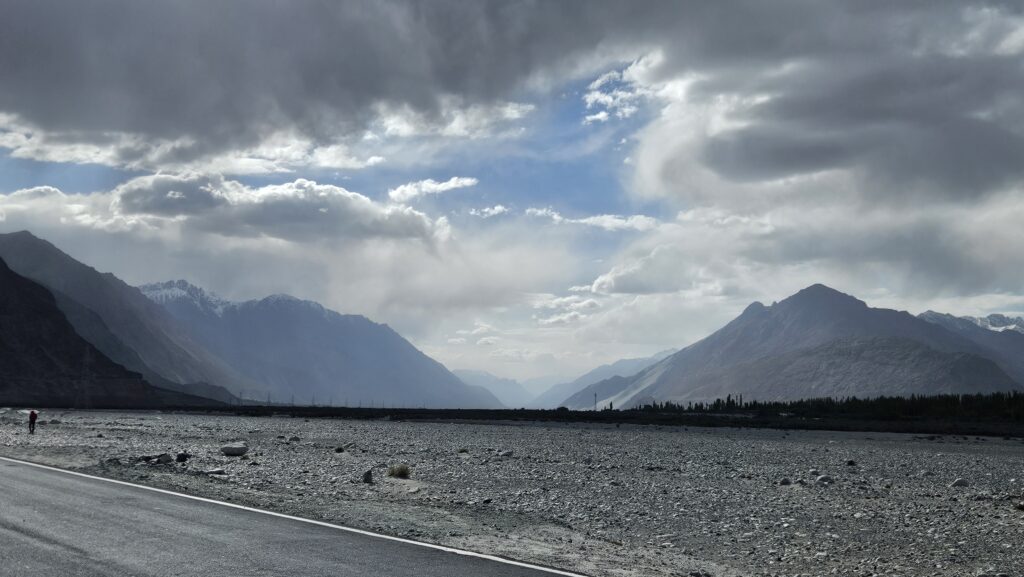
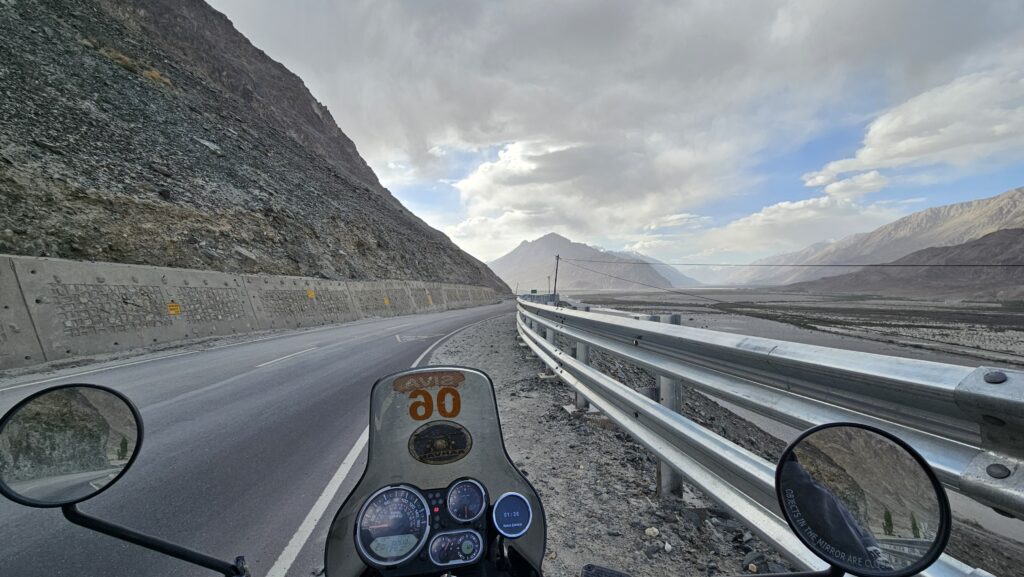
Every few hundred metres, the entire landscape changed. Not dramatically, just enough to make me stop again. And again. And again.
Eventually, I stopped pretending I was trying to keep up with the group. There was simply no point. A voice in my head kept repeating the same sentence.
“Who knows if I’ll ever see this again?”
So I parked the motorcycle. Looked around, got back on. Rode another hundred metres, and repeat. I wasn’t chasing Nubra anymore. I was chasing moments.
The Monastery I Wasn’t Supposed to Visit
By the time I got moving again, I was properly behind everyone else.
A little later, I noticed a gigantic Buddha statue standing high above the valley. Earlier in the morning, our ride lead had mentioned Diskit Monastery. Naturally, my brain connected the dots.
“This has to be it.”
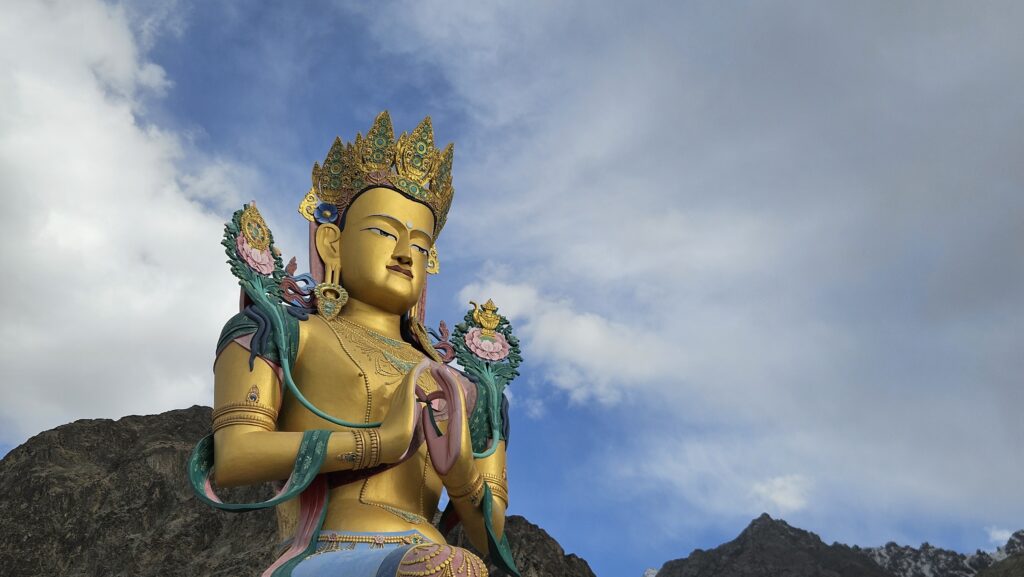
I rode straight towards it. The security guard asked for my group’s name and, without another question, waved me inside. Perfect. Except…My group wasn’t there. Anywhere. Now I was confused. Had they already visited and left? I called my friend. Turns out, they had never come. I had somehow managed to visit a place we weren’t even supposed to stop at.
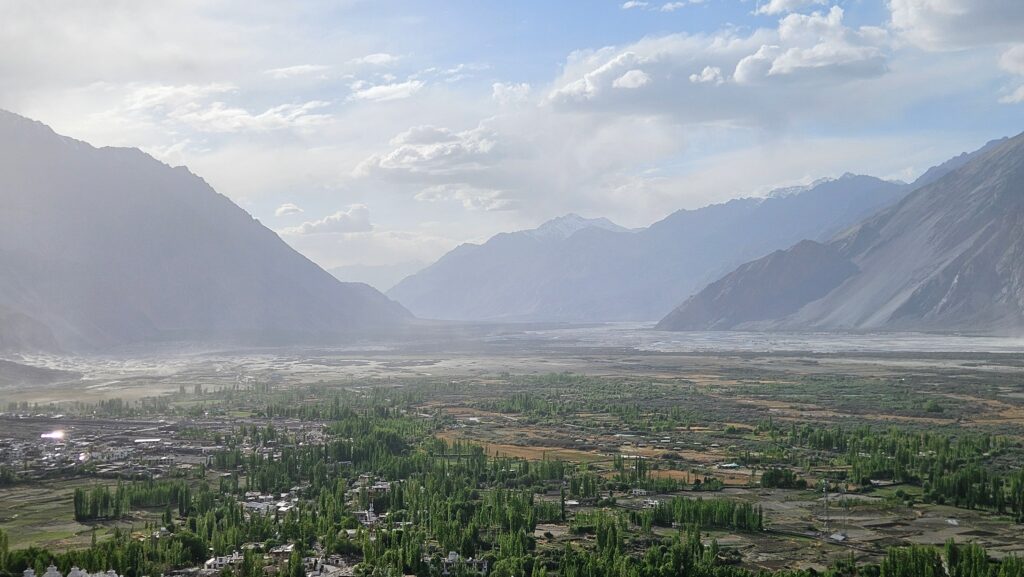
To this day, I still have no idea why the guard let me in for free. At that point, there was only one sensible thing left to do – explore it. And honestly? I’m glad I did.
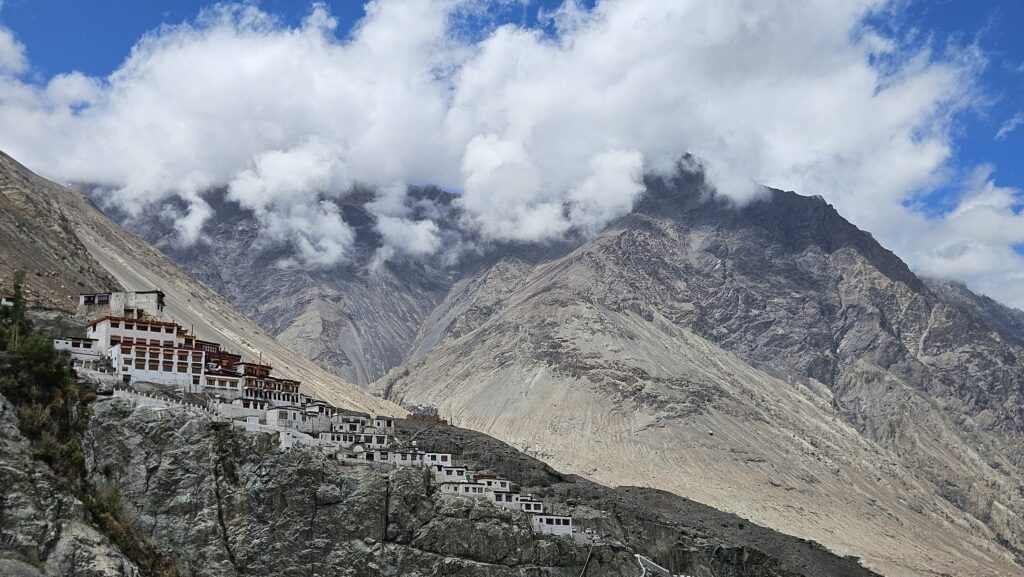
The giant Maitreya Buddha overlooked the valley in complete silence while Diskit Monastery stood beautifully against the mountains behind it. The afternoon light kept shifting through the clouds, changing the mood of the monastery every few minutes.
Eventually, I reunited with the group. Apparently, the instruction had been: “We’re not stopping at Diskit.”
Somewhere along the way, I had completely missed the word not. Oops.
I apologised to everyone, we had a good laugh about it, and continued towards Hunder.
Looking Beyond the Tourists
Riding through the Hunder sand dunes was unexpectedly technical – The loose sand demanded constant attention, and balancing the motorcycle through those sections turned out to be more fun than I had imagined.
The place itself, however, wasn’t really my kind of destination. Camel rides, food stalls, photographers, crowd – It felt too busy to be my cup of tea
So I quietly walked away from all of it. A little further down, I found a quieter corner overlooking the valley. Suraj — yes, I realise I never introduced him before — joined me there.
Together, we watched the evening light slowly transform the mountains. The maroon peaks deepened. The golden slopes turned amber. Every passing minute brought a slightly different colour palette.
We didn’t speak much. We didn’t need to. The mountains were doing a perfectly good job carrying the conversation.
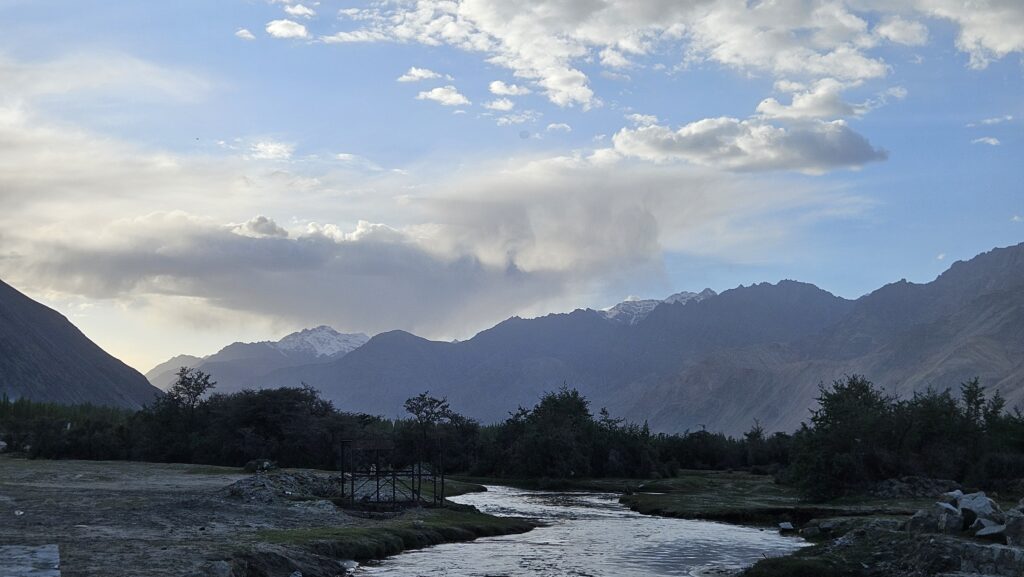
A Ladakhi Evening
Our campsite stood barely three kilometres away, right beside the wide riverbed.
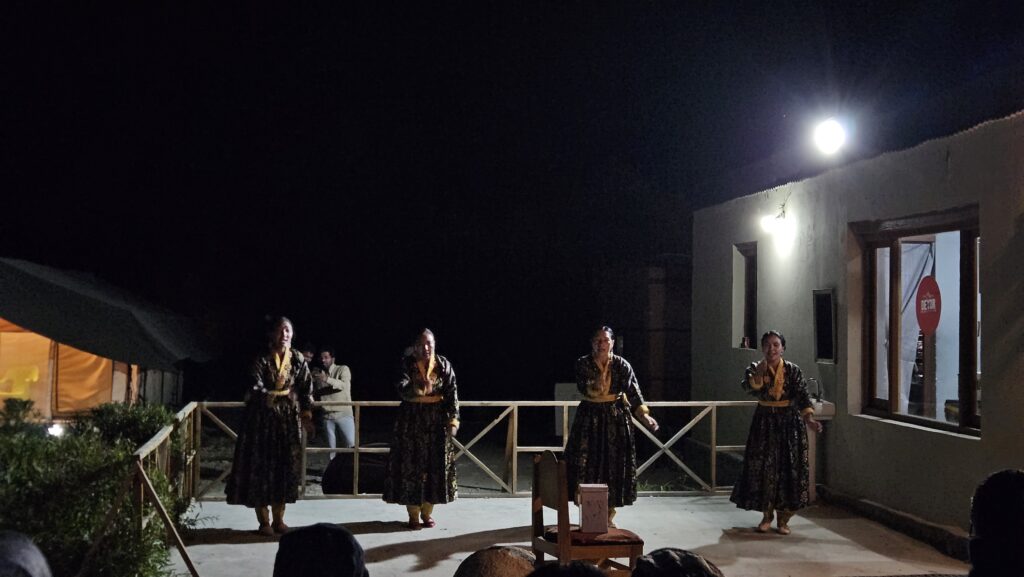
After freshening up, everyone gathered for dinner. As the evening settled in, music slowly filled the campsite. A group of local performers had arrived. The men played traditional instruments while the women danced gracefully in beautiful Ladakhi attire.
I don’t know enough about the history behind the performance to explain it properly. But I remember smiling throughout.
There was something incredibly wholesome about ending such an overwhelming day not with another viewpoint or another pass, but with a glimpse into the culture that has quietly flourished in these mountains for centuries.
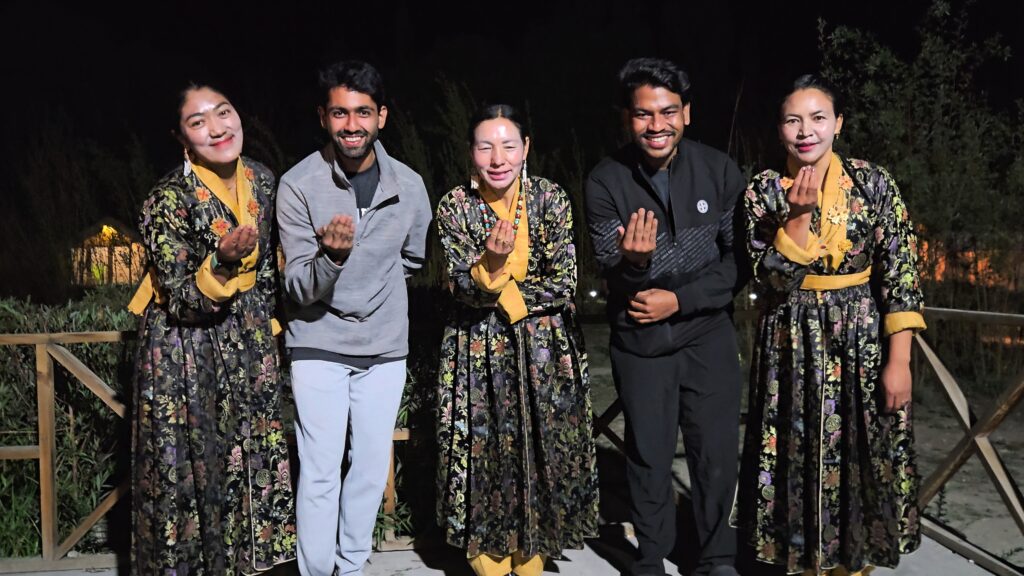
Before calling it a night, they happily posed for photographs with all of us. One final memory from another unforgettable day.
As I crawled into bed, my mind wandered to tomorrow’s route. Because tomorrow…we were riding towards Pakistan.
June 3 — Nubra Valley to Turtuk and Back
Towards the Edge of the Country
Unlike the previous few days, today’s ride wasn’t particularly long. Our destination lay to the northwest of Nubra Valley, close to the Line of Control.
Two villages stood on our route—Turtuk and Thang. Their history is as fascinating as their geography.
Both were once part of Pakistan-controlled territory until the 1971 Indo-Pak war, when the Indian Army captured this region during the conflict. Along with Chalunka and Tyakshi, they became four villages that changed countries without ever moving an inch. Today, they remain among the northernmost inhabited villages in India, carrying a unique blend of Balti culture, history and Himalayan life.
It wasn’t every day you got to ride towards the edge of your own country.
The Mountains Had Other Plans
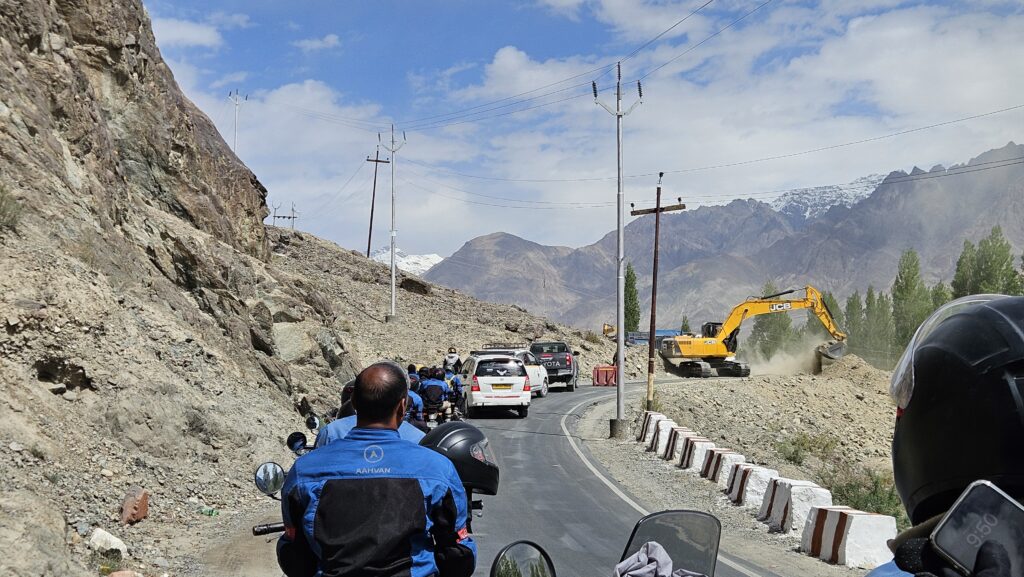
We left camp around ten in the morning. Barely a few kilometres later, the convoy came to a halt – a landslide had blocked the highway. But, nobody seemed particularly surprised. This was simply how mountain roads worked.
For about fifteen minutes we watched the BRO machines quietly do what they do best. And before long, the road was open again and we continued.
The route towards Thang kept changing character – Fresh tarmac, broken roads, construction patches, loose gravel, repeat. Just enough variety to keep you fully engaged without ever becoming exhausting.
The Bridge I’ll Never Forget
The real adventure began roughly ten kilometres before the Shyok War Memorial. An old wooden bridge appeared in front of us, stretching across the mighty Shyok River.
It looked exactly like something out of an old expedition documentary. So old, in fact, that officials were allowing only one vehicle to cross at a time.
When my turn came, I rolled onto the bridge. Immediately, the wooden planks beneath the tyres began producing rhythmic clicking sounds.
Below me, the Shyok roared through the valley with unbelievable force. Ahead lay the mountains. Behind me, the road disappeared. For those thirty or forty seconds, I genuinely wished there was a drone somewhere filming the entire thing. It was the kind of moment that made you feel like the main character in your own adventure.
Dust, Dust and More Dust
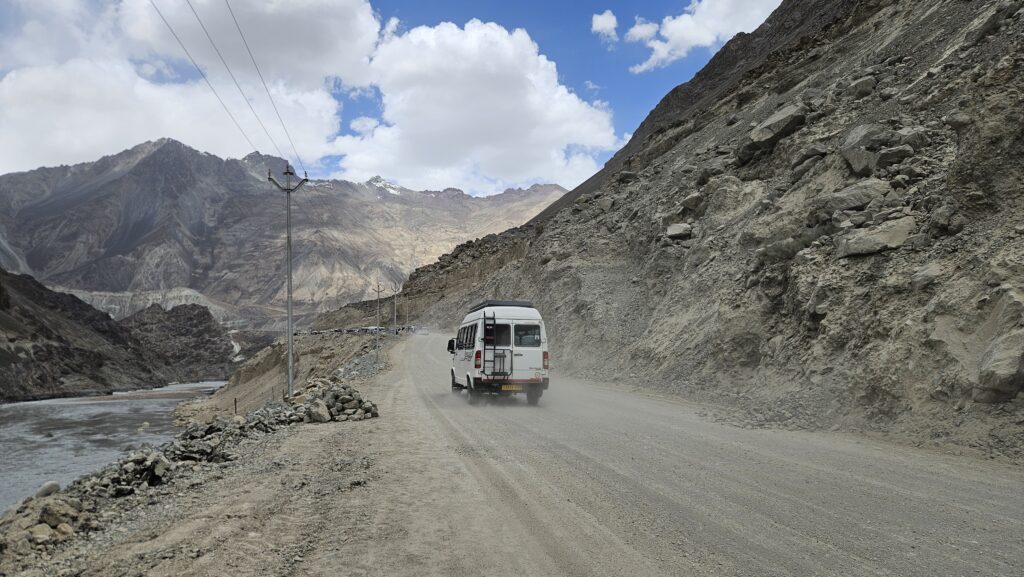
If the bridge was cinematic, the next ten kilometres were absolute chaos – the road disappeared almost entirely. Loose dirt replaced asphalt.
Every passing vehicle threw massive clouds of dust into the air. Visibility dropped dramatically. Even with my face fully covered, I could feel fine dust finding its way into my throat and nose.
At one point, another landslide briefly stopped us. Fortunately, this one was cleared within minutes of our arrival.
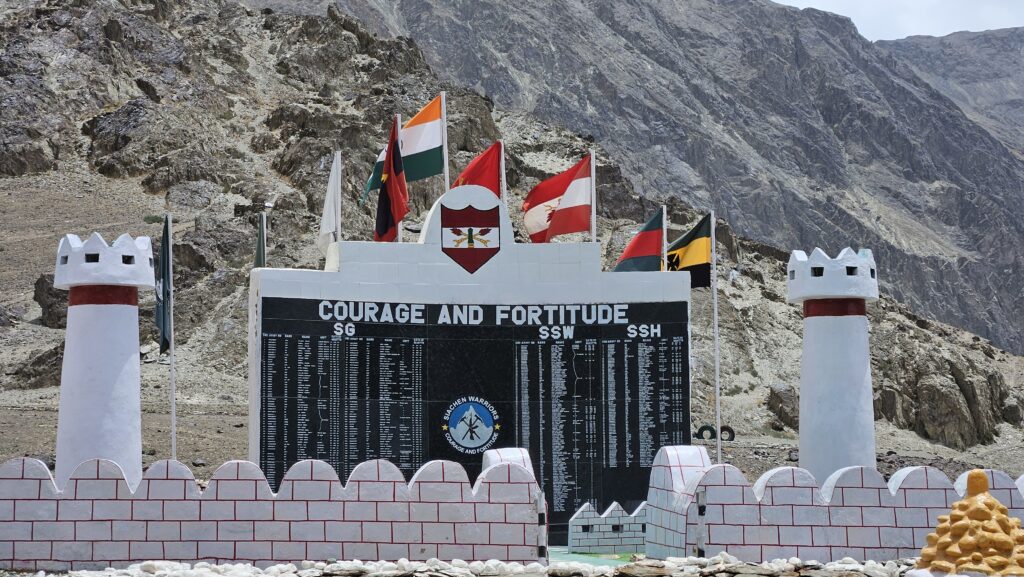
By the time we finally reached the Shyok War Memorial, every rider looked like they’d spent the morning rolling through flour. Except it wasn’t flour – it was Ladakh.
When the group slowed Down
We ended up spending nearly two hours at the memorial.
Honestly? Far longer than necessary. It wasn’t because there was that much to see. It was simply one of those moments that naturally happen when travelling in a large group – Some people were eating, Some were shopping, Some chatting.
Eventually, helmets went back on. It was finally time to ride towards Thang.
Standing at the Edge of India
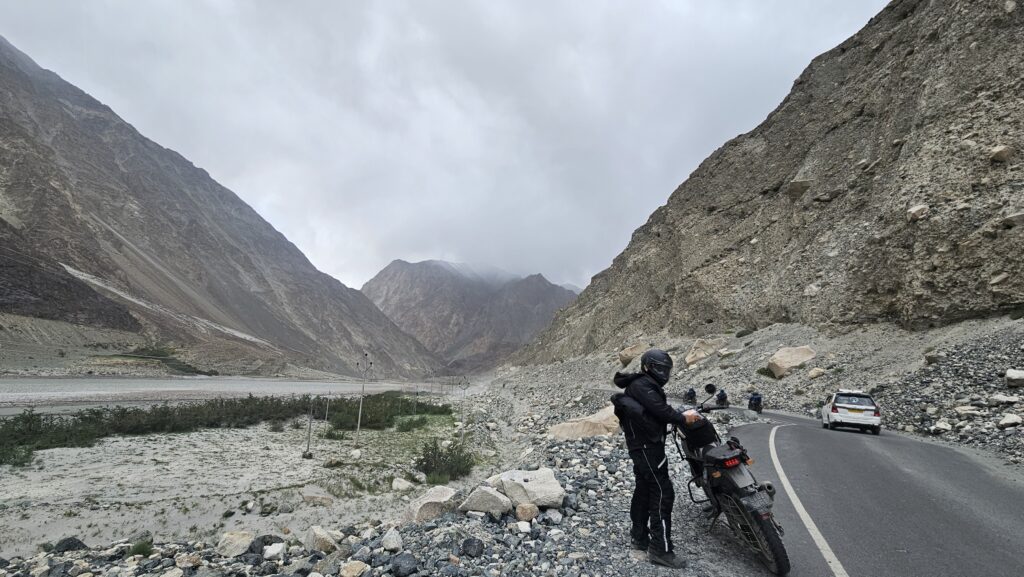
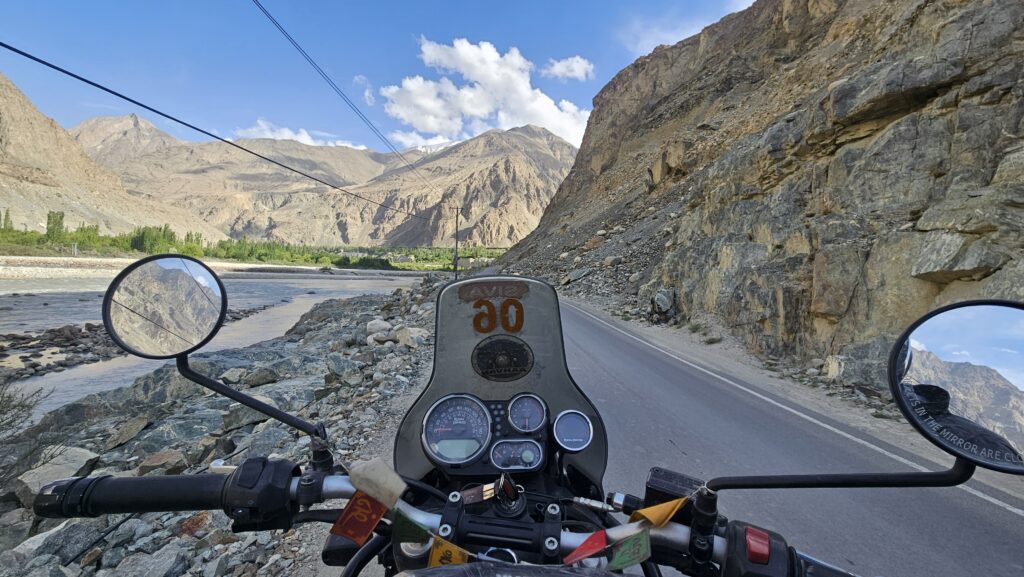
The final stretch was glorious. Smooth roads hugged the Shyok River almost the entire way.
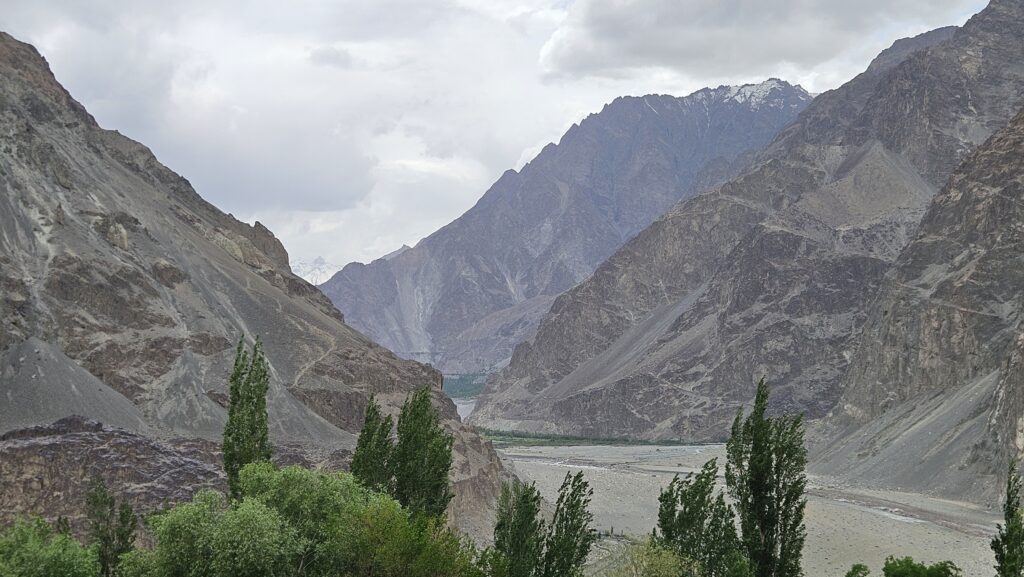
The mountains continued changing colours with every passing kilometre, their mineral-rich slopes reflecting sunlight in shades I still struggle to describe.
When I imagined Thang before the trip, I pictured lively village streets – Children playing, locals going about their day, tiny mountain homes tucked into the valley.
Reality was different. The tourist-accessible section ended at a cluster of restaurants and viewing points overlooking the border. Naturally, everyone headed towards the viewing gallery. I didn’t. Instead, I stayed back.
Found a quiet place to sit, and finally allowed the moment to sink in. I had ridden all the way here. To the northern edge of the country. The border itself wasn’t what fascinated me, the journey was. The mountains, the roads, the rivers, everything it had taken to get here.
Pit stop at Turtuk
After lunch, we began riding back towards Nubra with one planned stop at Turtuk. The village itself is beautiful – Stone pathways, traditional Balti homes, Apricot trees. A culture unlike anywhere else I’d seen during the trip.
Unfortunately, it was also crowded. Very crowded. Tourists filled the narrow lanes, and despite walking around for a while, I never quite found the quiet corner I was hoping for.
By then, I had realised something about myself – I didn’t connect with places through crowds. I connected with them through stillness, a momentary pause. So instead of forcing the experience, I quietly walked back towards the motorcycle and decided to begin the ride back.
Riding Home
The route back retraced the same roads we had ridden earlier in the day. The same bridge, the same dusty stretches, the same mountains.
Yet somehow, everything felt calmer now. Perhaps because there was nowhere left to rush.
Golden hour accompanied us for most of the ride back towards Nubra. By the time we rolled back into camp, it had been a quieter day – Less dramatic, Less intense.
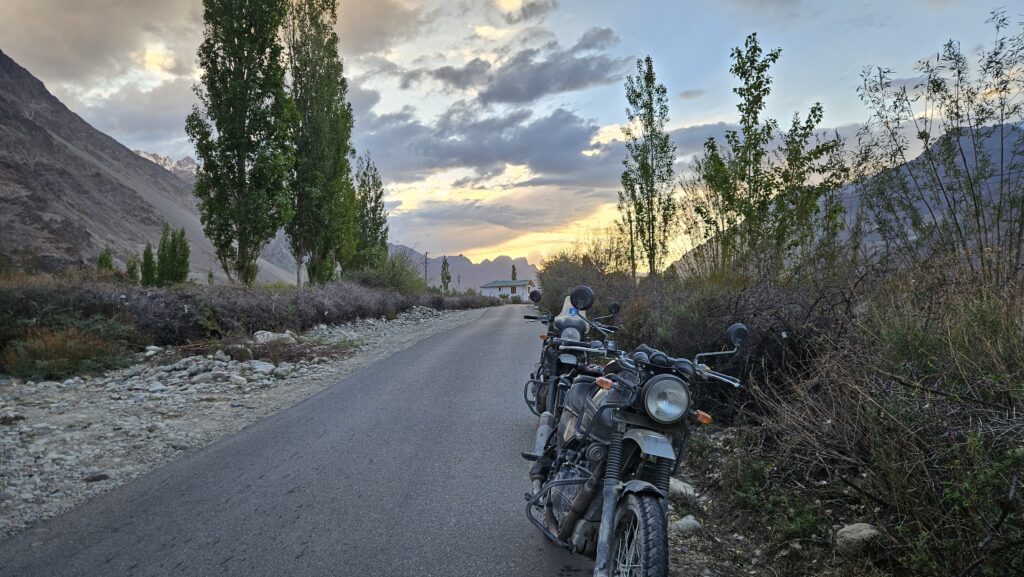
But somehow, it stayed with me. Not because I reached India’s northern frontier. But because somewhere along the way, I realised the value of tiny moments and how they made me feel as this journey continues to unfold.
June 4 – Nubra to Pangong
There are some places you know long before you ever visit them. Not because you’ve studied them on a map. Not because you’ve planned an itinerary, but because they’ve quietly lived somewhere in your childhood. For me, Pangong Lake was one of those places. Like millions of kids who grew up in the late 2000s, my first memory of Pangong wasn’t from a travel documentary or a geography textbook.
It was the final scene of 3 Idiots – A ridiculously blue lake, snow-capped mountains, three friends laughing by the shore – that single frame had lived rent-free in my head for years. And somehow…today, I wasn’t just visiting Pangong – I was riding there. Even now, writing this weeks later, that sentence still feels slightly unbelievable.
A Familiar Place, Seen for the First Time
Before heading towards Pangong, our itinerary included one short stop at Diskit Monastery. Unlike everyone else in the group, this wasn’t my first visit.
Technically… it was my second. I had already “accidentally” explored it the previous day after completely missing the word not in our ride briefing.
Walking through the monastery again, I expected familiarity. Instead, I found curiosity. The first visit had been all about the obvious – The giant Maitreya Buddha, the monastery, the views.
The second visit was quieter – this time I noticed the tiny souvenir shops tucked into corners. Children weaving effortlessly through narrow pathways. The faded textures of the monastery walls. The colourful prayer flags dancing against an impossibly blue sky. The old women sitting outside their homes as though time itself had decided to slow down.
Without realising it, I had stopped sightseeing. I had started observing. I even picked up a couple of souvenirs before leaving. Not because I needed keepsakes, but because I wanted something tangible to remind me how this place had made me feel.
As we prepared to leave, another thought quietly settled into my mind. Maybe we underestimate revisiting places. The first visit introduces you – the second lets you notice. Perhaps that’s why people keep returning to mountains. Not because the mountains change, because their perspectives change.
The Weight of Waiting
As beautiful as the morning had been, it slowly began slipping away. Poor coordination meant we stayed at Diskit much longer than necessary. Normally, I wouldn’t have cared. But today wasn’t normal. Every passing minute felt like someone quietly stealing a little bit of golden light from the evening. When we finally left Diskit, I felt relieved. That relief lasted exactly until Khalsar, where we stopped. Again. Another delay – no clear timeline, no explanation.
Standing beside the motorcycle, I found myself doing mental arithmetic – distance remaining, current time, estimated riding hours – I absolutely didn’t want to ride beyond sun down. For the first time during the trip, I felt genuinely restless. Not because I wanted to reach a destination. Because I wanted enough time to experience it. And I needed time for it. Eventually, I took a decision – I walked over to the ride lead.
“I think I’ll head ahead.”
There wasn’t much else to say. I strapped my helmet back on, started the motorcycle, and for the first time during the expedition…I was riding alone. There was a strange silence that followed – No motorcycles in my mirrors, no convoy ahead. Just me, the road, and Pangong, somewhere beyond the mountains.
Why Adventure Bikes Exist
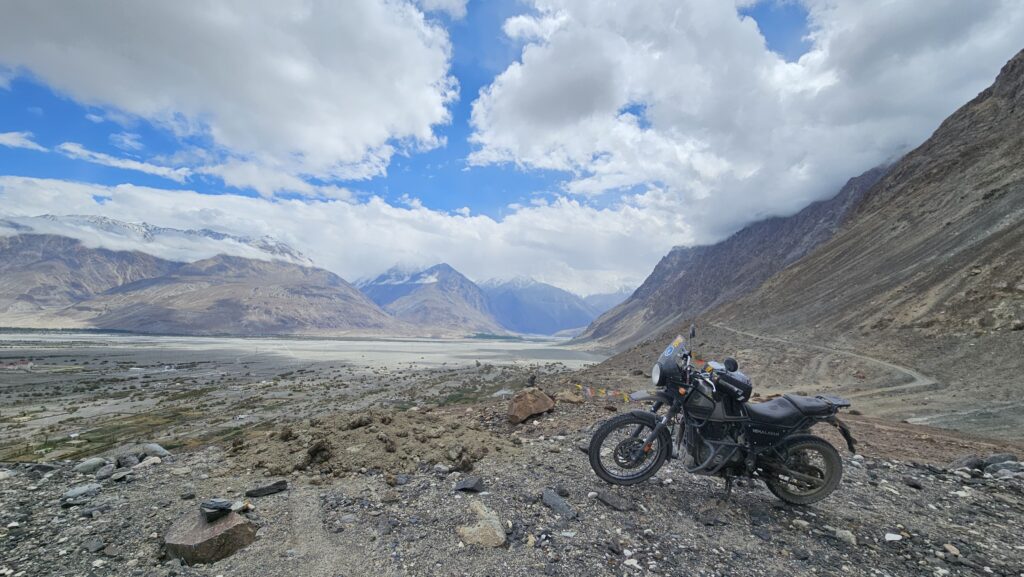
Not long after leaving Khalsar, the road simply…ended. In its place appeared a series of fast-flowing water crossings – crystal-clear streams rushed across the road, hiding uneven rocks beneath the surface. Normally, that would have demanded caution. Instead, the motorcycle almost laughed its way across.
Standing on the pegs, letting the suspension absorb everything beneath me, I realised why people fall in love with adventure motorcycles. This. Exactly this. One moment you’re cruising on asphalt, the next you’re crossing a Himalayan stream without needing to think twice.
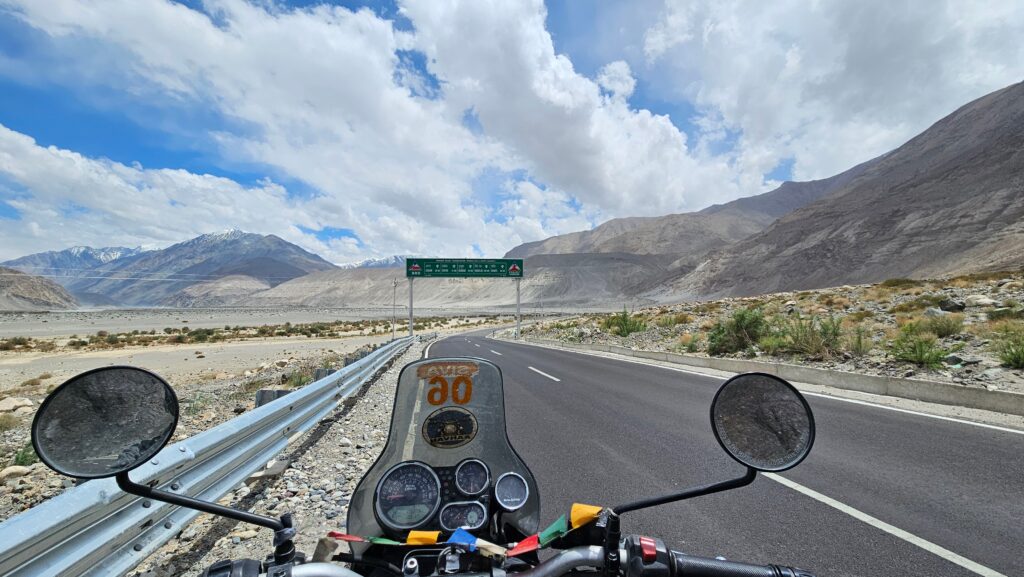
The crossings lasted only a few minutes. Then, just as suddenly as they had appeared…they disappeared. What replaced them caught me completely off guard. A highway. Not just any highway, but a flawless ribbon of perfectly laid black asphalt stretching into the mountains – bright lane markings, gentle curves, and enough visibility to comfortably cruise close to 100 km/h.
Somewhere in one of the most remote corners of India. I looked down at my speedometer more than once. Partly to check my speed, mostly because my brain refused to believe roads like this existed here.
Lunch, Local Wisdom, and the Better Road
By the time I reached Shyok village, it was close to three in the afternoon.
Hunger had finally won. A quick lunch later, I pulled out my phone to check the route ahead. Google Maps confidently suggested one road.
The locals immediately disagreed. They pointed towards another route.
“Take this one.”
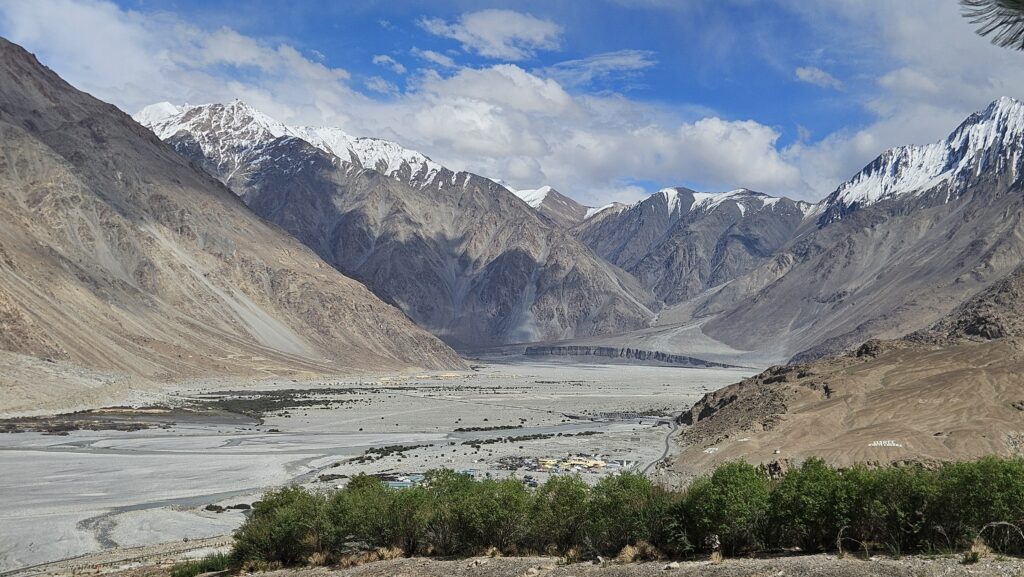
Sometimes, experience outweighs algorithms. It’s always better to not question the locals. I folded the phone back into my pocket. It turned out to be one of the best decisions of the entire trip. The road narrowed dramatically, hugging the Shyok River almost the entire way. On one side stood towering mountains. On the other…
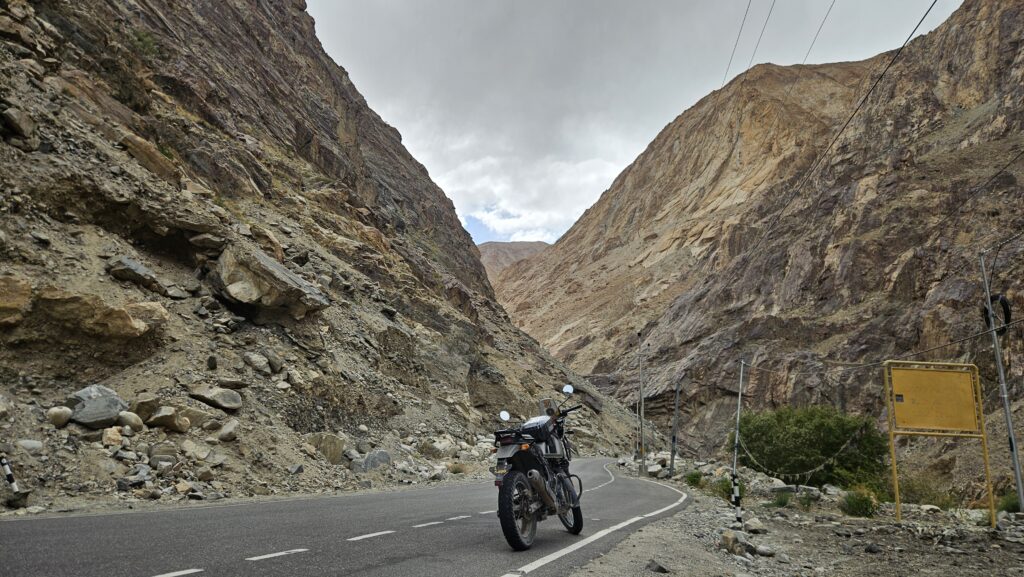
a valley dropping sharply towards the river below. The corners flowed into one another with almost impossible rhythm. Every lean felt effortless. Every exit opened into another postcard.
There are roads that challenge you. There are roads that relax you. And then there are roads like this – roads that make you forget you’re riding at all.
At some point, without warning, my eyes began watering. Not because of the cold. Not because of the wind – Tears. I couldn’t explain them then. I still can’t.
Perhaps they tears of simply joy, perhaps gratitude, perhaps the overwhelming realisation that I was spending an ordinary weekday riding one of the most spectacular roads in the world. I stopped for a moment. Not because I needed a break, but because moments like these need to be taken slow.
A Storm Before the Lake
Further ahead, the weather changed almost theatrically. Dark clouds gathered over distant mountains. The wind picked up. Fine sand began sweeping across the road.
For a brief stretch, I rode through what felt like a miniature sandstorm – Visibility softened, and the mountains disappeared behind shifting curtains of dust.
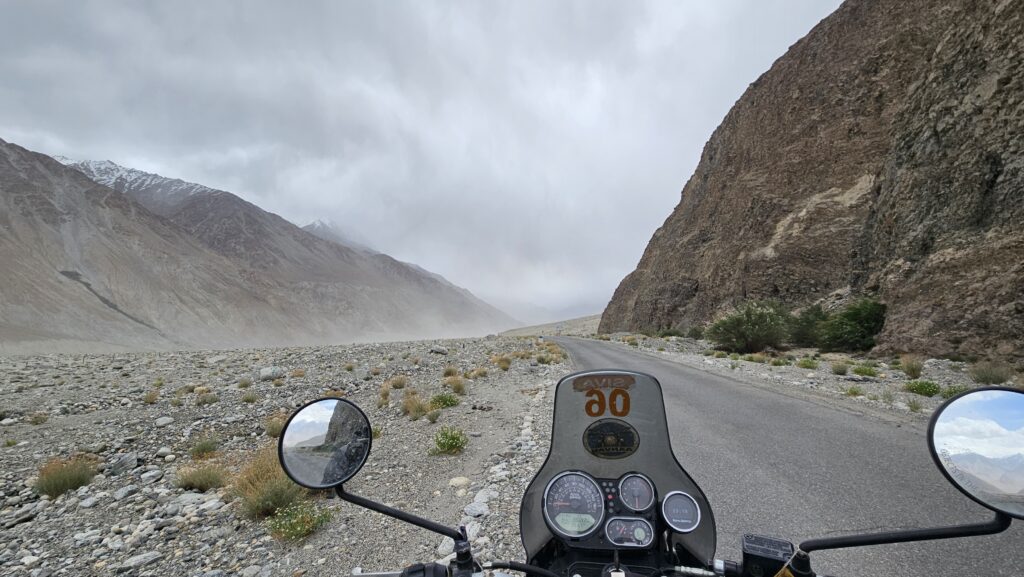
The entire landscape looked cinematic. I couldn’t resist. I parked the bike, took off my helmet – and simply watched. On any normal Tuesday…I’d probably have been staring at lines of code inside an office. Instead, here I was. Somewhere deep in Ladakh. Watching a Himalayan sandstorm roll across the valley. Life has a funny way of surprising you when you least expect it.
The sun was beginning its slow descent. Somewhere ahead, hidden behind countless bends, was the lake I’d first fallen in love with through a movie screen years ago. Every kilometre now felt heavier with anticipation. I twisted the throttle – Pangong was finally within reach.
To be continued…
You may also like
If stories of slow travel, mountains, and meaningful journeys resonate with you, you might enjoy these as well:
- A Solo ride to Munnar – A beautiful journey across the rolling tea estates of Munnar
- Explore Chikkamagaluru – The perfect 2-day Plan to explore Chikkamagaluru’s best kept secrets
- Explore Kodaikanal – The perfect 3-day Plan to experience Kodaikanal
- Long weekend travel guide 2026 — A carefully articulated list of destinations to explore in this year’s long weekends
- Riding across the Konkan Coastline — an epic adventure along India’s most epic beaches
- Workation from Bir-Billing – The dream workation experience
Also