
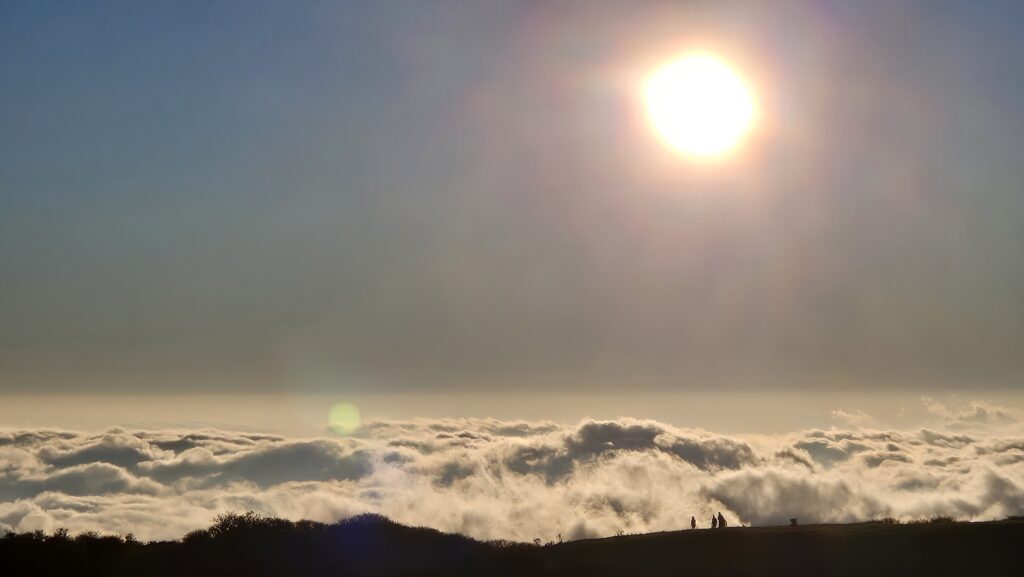
The Sandakphu–Phalut trek had lived on my bucket list for years — quietly, patiently. Not because I didn’t want it badly enough, but because somewhere deep down, I wasn’t sure if I was ready. 65 kilometres in the high Himalayas over 6 days isn’t just about endurance. This trek doesn’t just test physical fitness — it tests how far your mind is willing to go when your body starts negotiating. But this winter, the stars to do this trek aligned and when they did, I didnt resist.
Here’s how the story goes.
Siliguri to Sepi — Back in the Mountains
We left Siliguri around 9:45 AM, the plains slowly giving way to winding roads and rising hills. The journey itself felt like a soft introduction — unhurried, scenic, and full of surprises.
The local Food
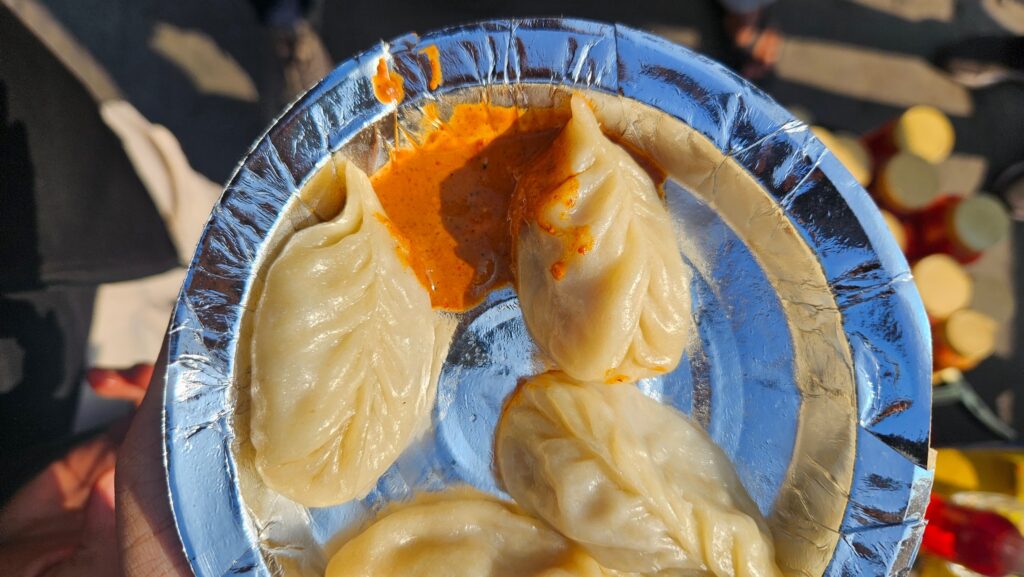
The Tibetan and Nepali meals we had en route were nothing short of exceptional — comforting, flavourful, and deeply satisfying. It immediately reminded me how different the Eastern Himalayas feel compared to regions like Uttarakhand or Himachal Pradesh. The food here isn’t just good — it’s soulful, layered with culture, and incredibly memorable.
Getting closer
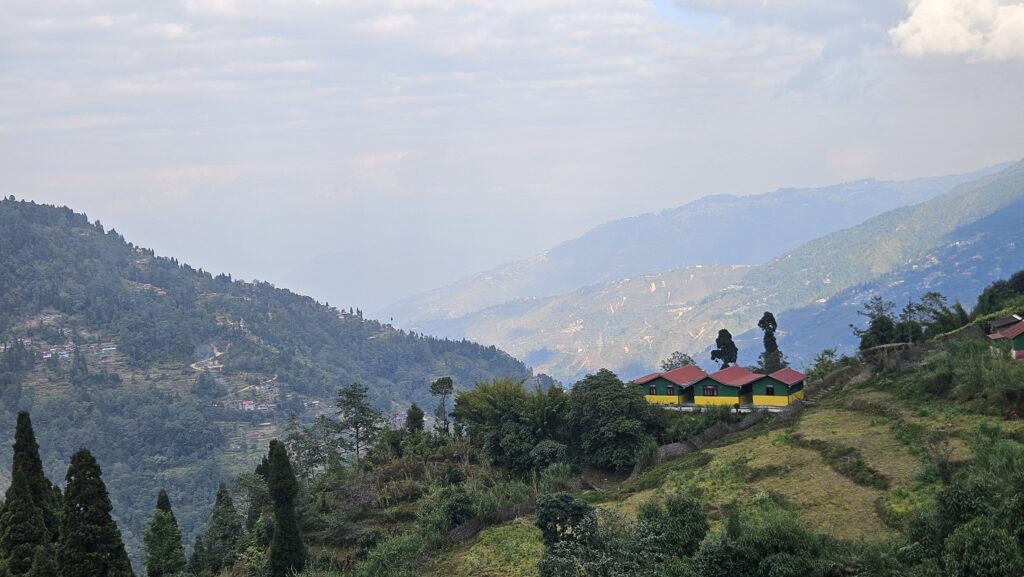
As we drove closer to Sepi, the landscape began to change. Houses grew smaller, brighter, and more colourful. From a distance, we could spot Nepali villages tucked into the hills — a reminder that we were travelling right along the Indo-Nepal border. With every passing kilometre, the Nepali influence became more pronounced, not just in architecture but in the rhythm of life itself.
I was excited for another reason too.
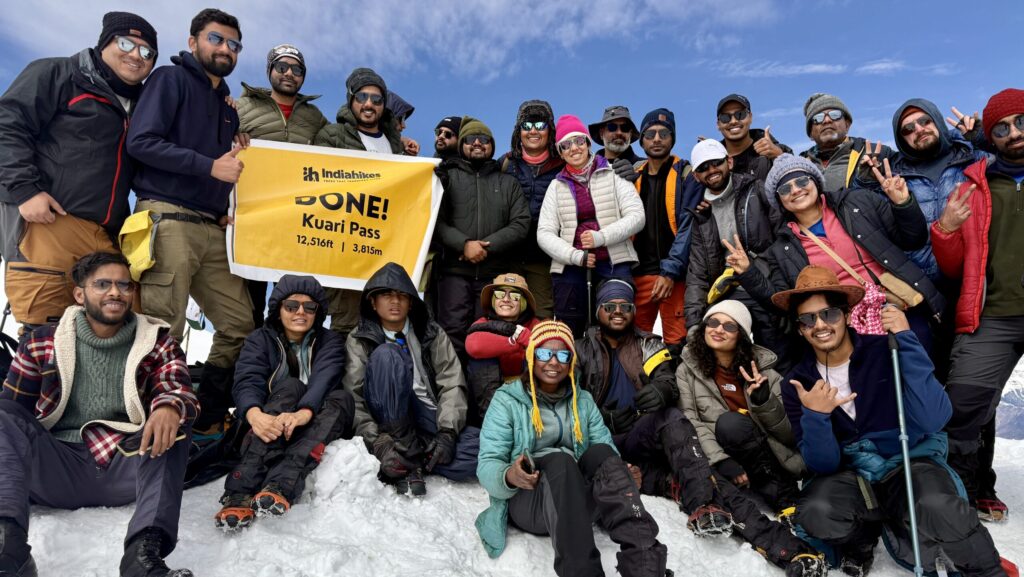
Our trek leader Vidya, wasn’t a stranger to me. I had trekked Kuari Pass with her back in March 2025, and knowing there was a familiar face leading the journey instantly made things feel warmer. It felt less like joining a trek and more like meeting an old friend in the mountains.
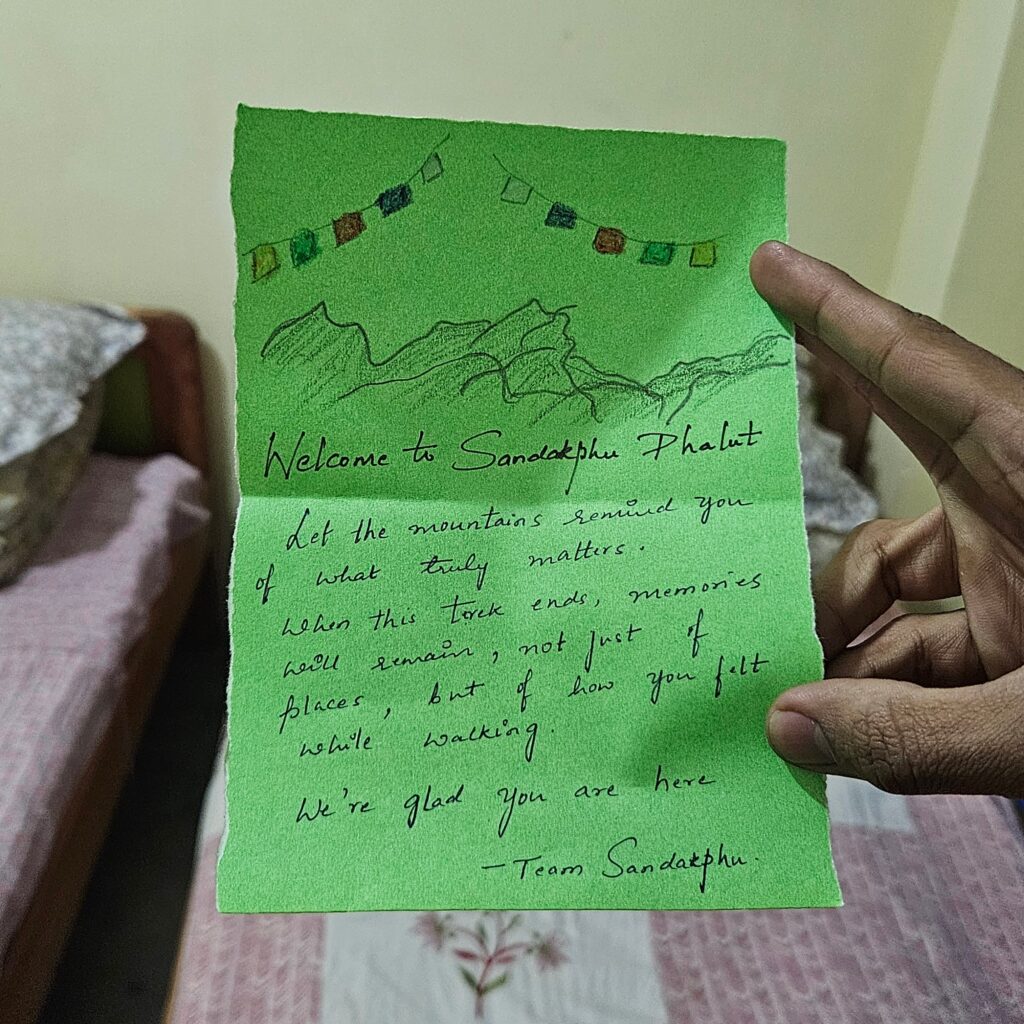
When we finally reached Sepi, the staff welcomed us with smiles, snacks, and efficient document checks. After collecting my rental gear, I headed to my room — and that’s when a small, unexpected moment hit me hard.
A handwritten welcome note lay on my bed.
It read: “Let the mountains remind you of what truly matters.”
And just like that, it sank in.
I was back in the mountains.
Soon after, we gathered for the briefing session — learning about the trail, the Singalila National Park, responsible trekking practices, and how small actions can make a big difference in preserving fragile ecosystems. These conversations felt grounding. This wasn’t just about reaching a summit — it was about respecting everything along the way.
That night, I packed my bag carefully, excitement buzzing quietly in my chest, and went to sleep early — ready for the trail to begin.
Day 1: Sepi → Rammam → Samanden
The day began with a symbolic crossing — the Shrikhola bridge — marking our entry into the Singalila National Park. It felt like stepping into a protected world, one where nature clearly called the shots.
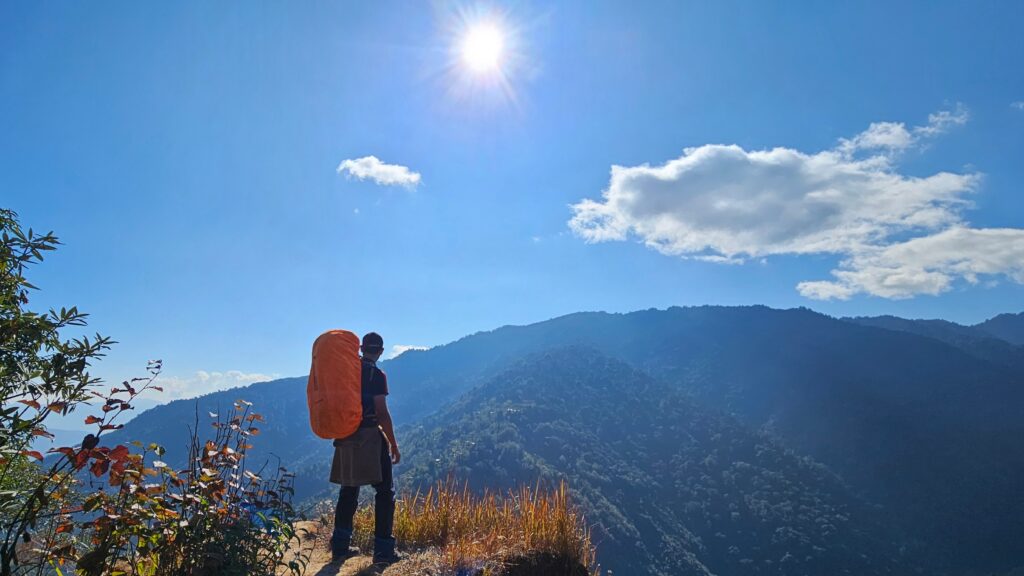
We walked along gentle roads beside the Shrikhola river, its constant murmur keeping us company. Somewhere along the way, we stopped by an open spot that offered great views for a few photos.
As the trail unfolded, I found myself walking alongside two fellow trekkers. Conversations flowed easily — about life, travel, and everything in between. It’s always fascinating how mountains accelerate human connections. Strangers begin to feel familiar far quicker than they would back home.
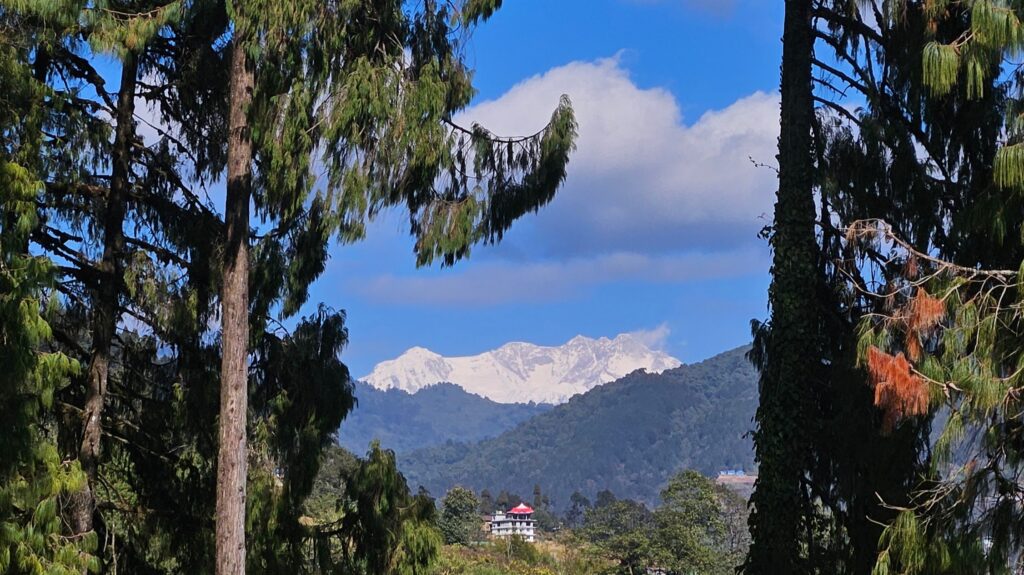
The first glipmse
There it was — faint yet unmistakable — stretched across the horizon. Even in its subtlety, it carried a quiet power. Seeing it for the first time felt surreal, like watching a long-imagined dream gently materialise.
Getting welcomed by the cutest host
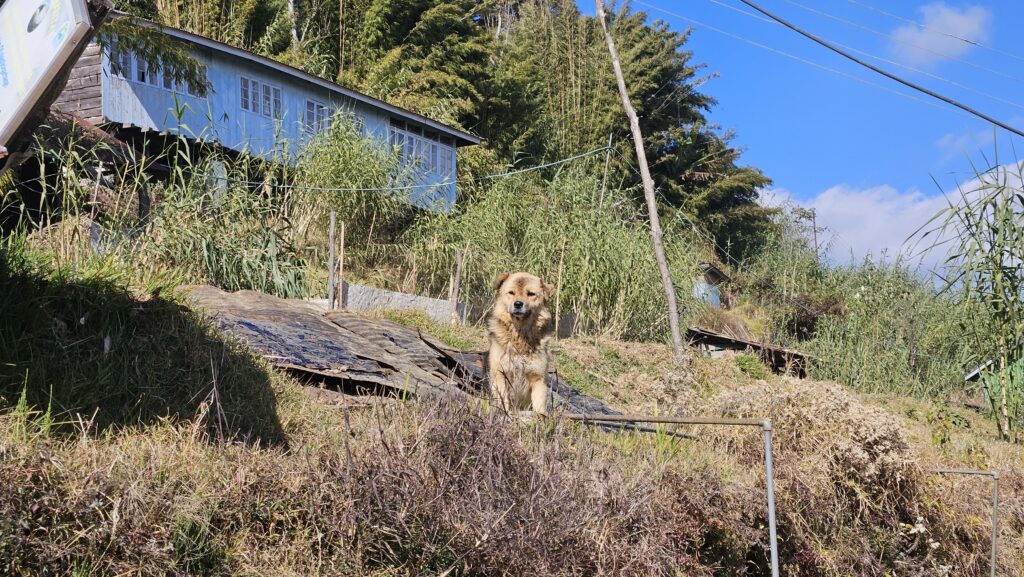
We reached Rammam village around lunchtime, greeted by a surprisingly photogenic dog who seemed to take his role as the village host very seriously. Lunch was served at a homestay with what might be one of the most scenic dining views I’ve ever experienced. The mountains you see from here belong to Sikkim, rising majestically as you eat — a reminder of how beautifully borders blur in the Himalayas.
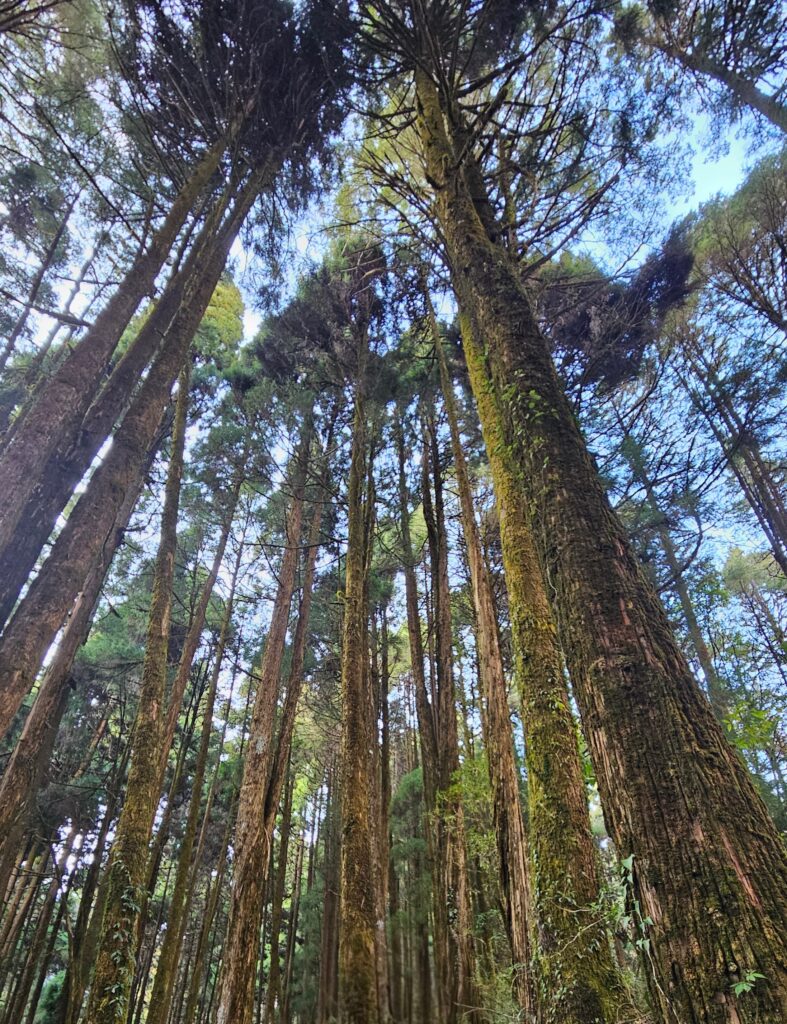
The dense forests of the Singalila National Park
We entered a dense forest section where sunlight barely made it through the canopy. The air felt noticeably cleaner, cooler — and soon enough, we began spotting lichen on trees. A quiet indicator of extremely pure air, it felt reassuring to know we were breathing some of the cleanest air imaginable.
At one point, I picked up a random twig — just out of curiosity — and realised I could identify seven different species of lichen growing on it alone. Seven species on one twig. That’s when it truly hit me how rich and untouched this ecosystem is. If a single twig could host that much biodiversity, imagine the scale of life thriving silently all around us.
The day ended with a 2 km steep ascent, pushing our legs just enough to remind us that this trek would demand effort. And then, we arrived at Samanden.
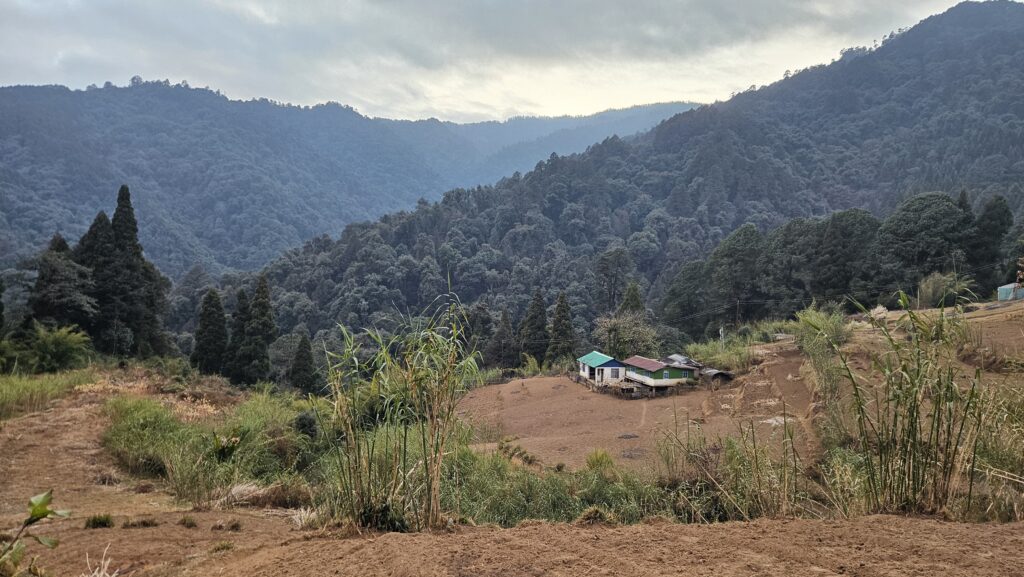
Often called “The Golden Plate”, Samanden sits on what feels like an unusually flat expanse, cradled by towering Himalayan peaks. The village is small — around 35 houses and roughly 85 people — and agriculture forms the backbone of daily life. I noticed corn stored carefully outside homes, used to feed cattle, horses, and mules that are integral to mountain living.
As night fell, we gathered inside our homestay. The entire group sat together in the dining area — eating dinner, playing games, sharing laughter. The warmth of people filled the room, both literally and emotionally, making the cold outside feel distant. Eventually, tired but content, we drifted off to sleep — knowing the mountains had only just begun telling their story.
Day 2: Samanden → Molley
I woke up nervous.
Today wasn’t just another trekking day — it was 10 kilometres of continuous ascent with close to 4,000 feet of elevation gain. The kind of day that doesn’t announce itself loudly but quietly sits in your head, reminding you that there’s no shortcut ahead. Only steady effort.
And that’s exactly how we approached it.
Somewhere along the trail, the mood lightened unexpectedly.
With a few of us wearing smartwatches, heart rates became the running joke of the day.
“What’s yours at?”
“Bro, mine just crossed 160.”
“Okay okay, let’s slow down.”
It was hilarious — but honestly, it helped. Obsessing over numbers, joking about it, checking in on each other somehow made the climb feel lighter mentally. Shared struggle has a strange way of bonding people.
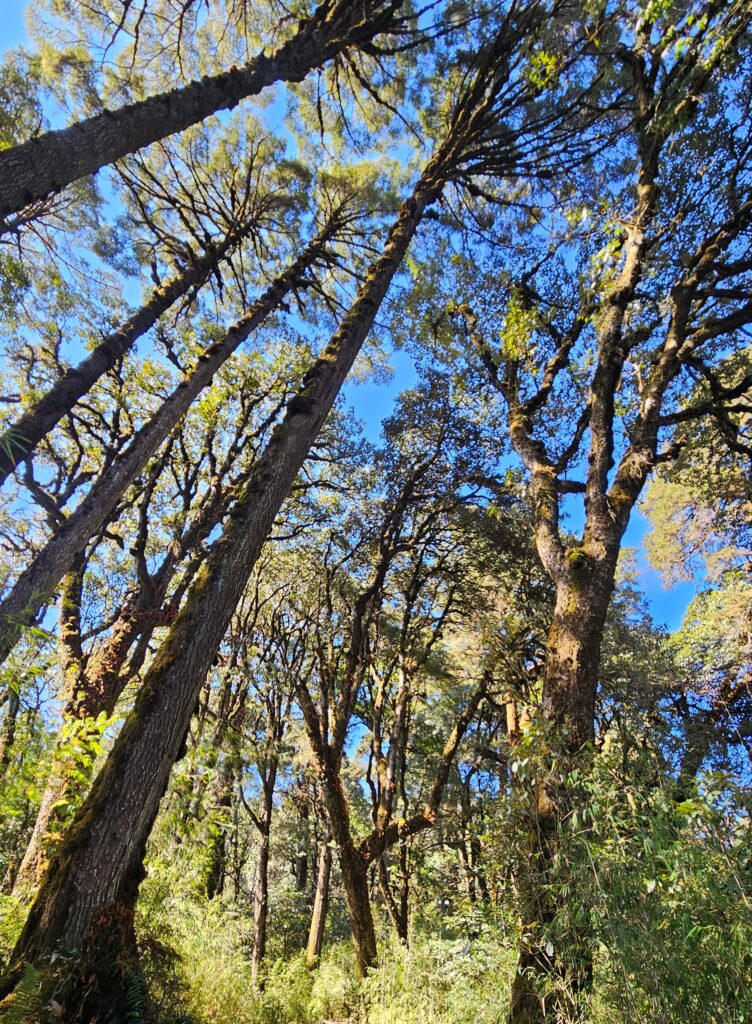
The beautiful Japanese Pine sections
I’ve always loved walking through dense forests, and Singalila National Park delivered beyond imagination. Towering Japanese pine trees formed an incredibly thick canopy overhead — so dense that sunlight barely filtered through for most of the 10 kilometres we walked. The forest floor felt alive, layered with moss, fallen needles, and life in every form.
As we gained altitude, the forest slowly transformed.
The much awaited bamboo sections
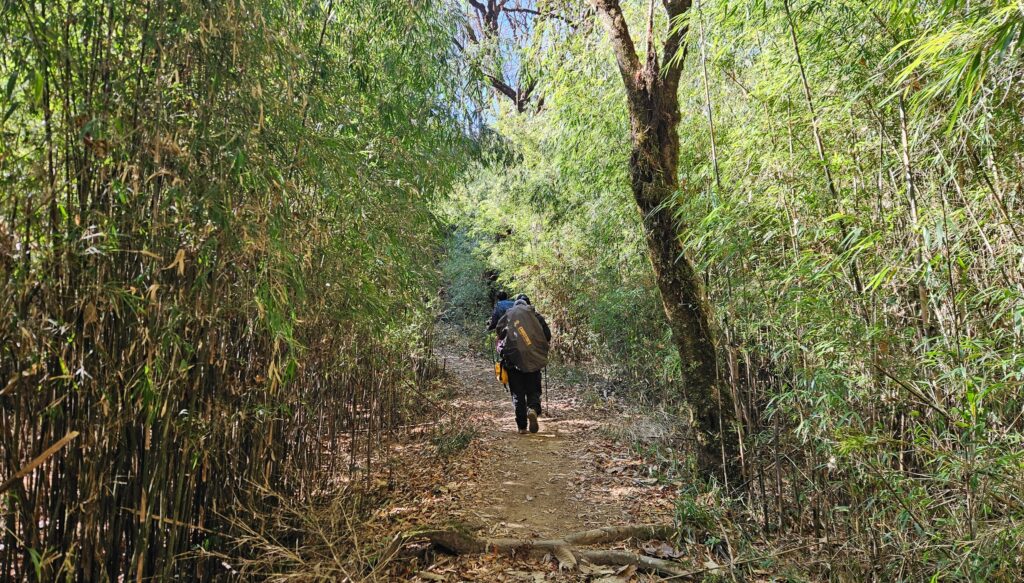
The pine canopy gave way to beautiful bamboo sections, their lush green leaves swaying gently in the mountain air. This was our halfway point — and lunch break. Sitting there, eating packed meals amidst bamboo forests, playing small games, laughing — it felt unreal.
But the mood shifted subtly after lunch.
This was red panda territory.
With around 87 red pandas currently recorded in the national park, this stretch carried a quiet excitement. We became more cautious, more silent. Footsteps softened, conversations dropped to whispers. Unfortunately, luck wasn’t on our side — we didn’t spot one. But walking silently through such pristine forest, knowing what might be watching us unseen, was an experience in itself.
We continued with short breaks every 1.5–2 kilometres, listening to our bodies, respecting the climb. And by around 3:30 PM, tired but satisfied, we finally reached Molley.
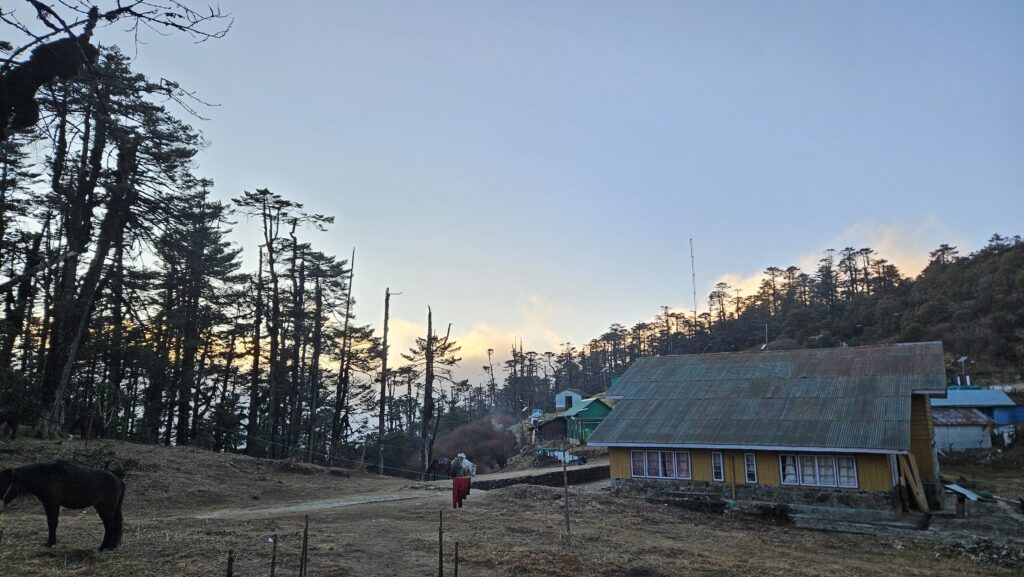
Molley wasn’t a campsite — it was a teahouse settlement, fully constructed out of wood to trap warmth in the harsh cold. Cozy would be an understatement. Separate dorms for men and women, wooden walls that held heat beautifully, and an instant sense of comfort after such a demanding day.
We layered up immediately to trap all that heat generated from hours of walking.
That night carried a different kind of intensity. Tomorrow was summit day.
An 18-kilometre adventure awaited us, and the plan was clear — wake up at 4 AM, leave by 5:30 AM. After a detailed briefing, a hearty dinner, and some quiet nervous energy floating in the room, we packed our bags carefully and went to bed early.
The mountains had been testing us gently so far.
Tomorrow, they would ask for everything we had.
Day 3: Molley → Sabargram → Phalut
Just about a kilometre into the day’s walk, everything stopped.
I saw it.
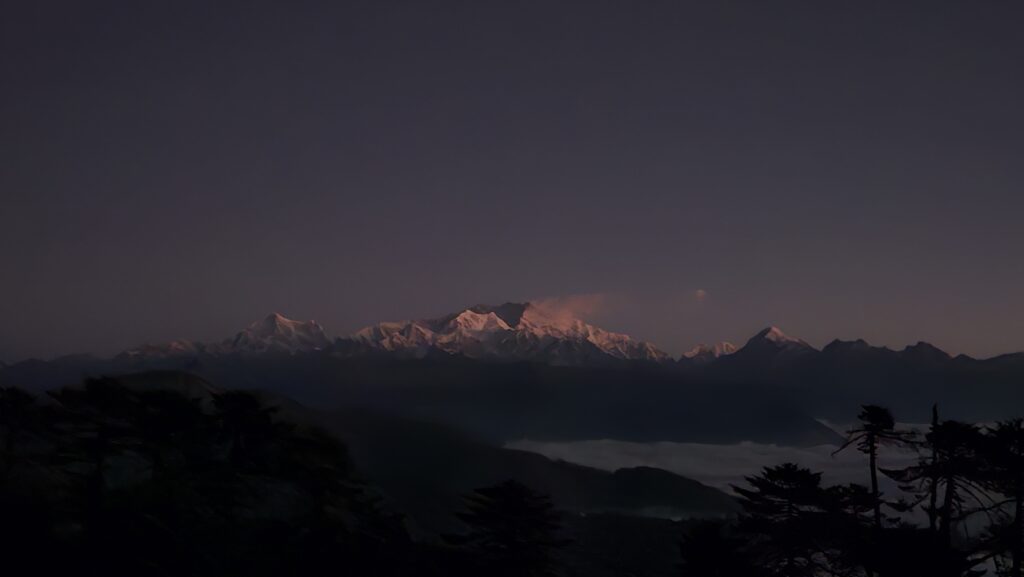
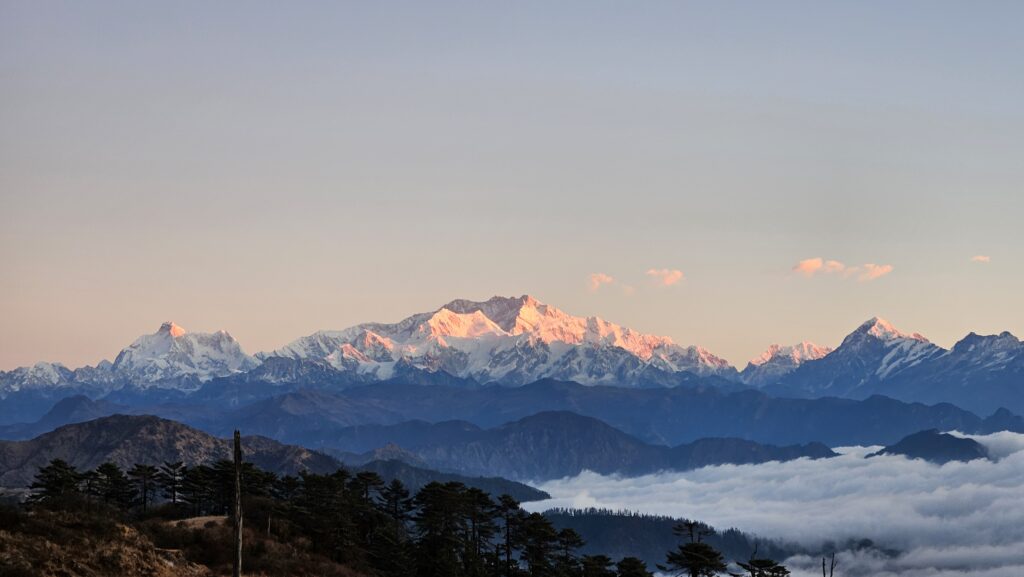
The Sleeping Buddha
My heart skipped a beat — and in that instant, months of self-doubt, preparation, hesitation, and quiet manifestation dissolved into nothingness. This was it. This was what I had been carrying in my head for so long. I didn’t think, I didn’t speak — I just rushed to the viewpoint.
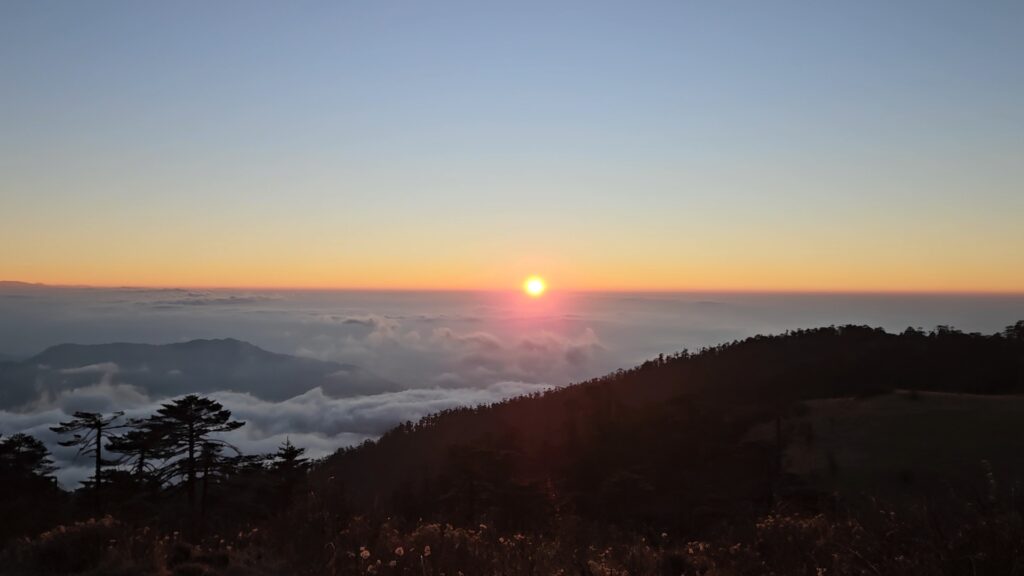
The most magical sunrise
A tear rolled down my cheek as I stood there, completely undone. The cold wind howled around us, relentless and sharp, but none of it mattered. I held onto my tripod tightly, trying to capture a timelapse, though the wind made it shaky and imperfect. Somehow, that imperfection felt right. That morning wasn’t meant to be pristine — it was meant to be felt.
Colours of the Kanchenjunga
Kanchenjunga slowly shifted through colours — soft pinks, warm oranges, then glowing yellows — as if the mountains themselves were breathing. It felt less like watching a sunrise and more like witnessing poetry being written live, straight out of the most artistic minds this world has known. Words fall painfully short when I try to describe what I felt in those moments.
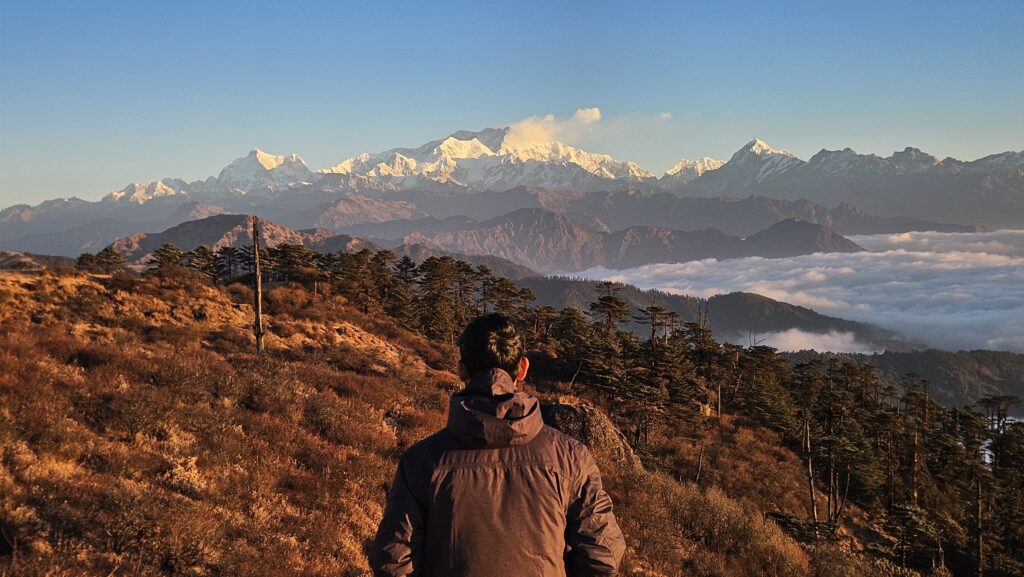
After soaking in the moment, we began our final push towards Phalut. From Sabargram, it was a 7 km one-way walk. Surprisingly, the adrenaline of a typical summit push wasn’t quite there — the emotional climax had already happened at sunrise. The Sleeping Buddha was still visible, still close, still commanding our attention.
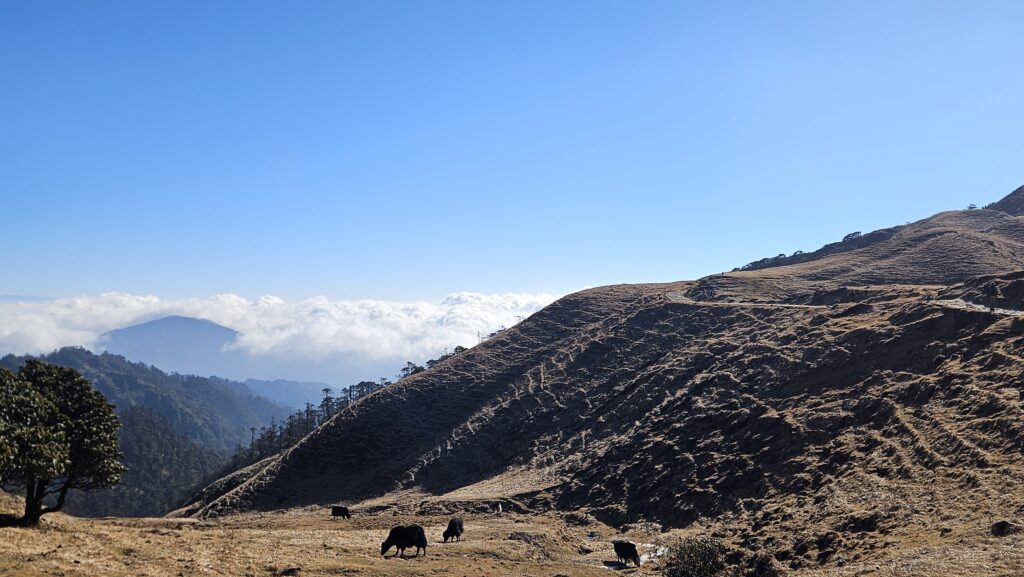
Yet, the route to Phalut was breathtaking in its own quiet way.
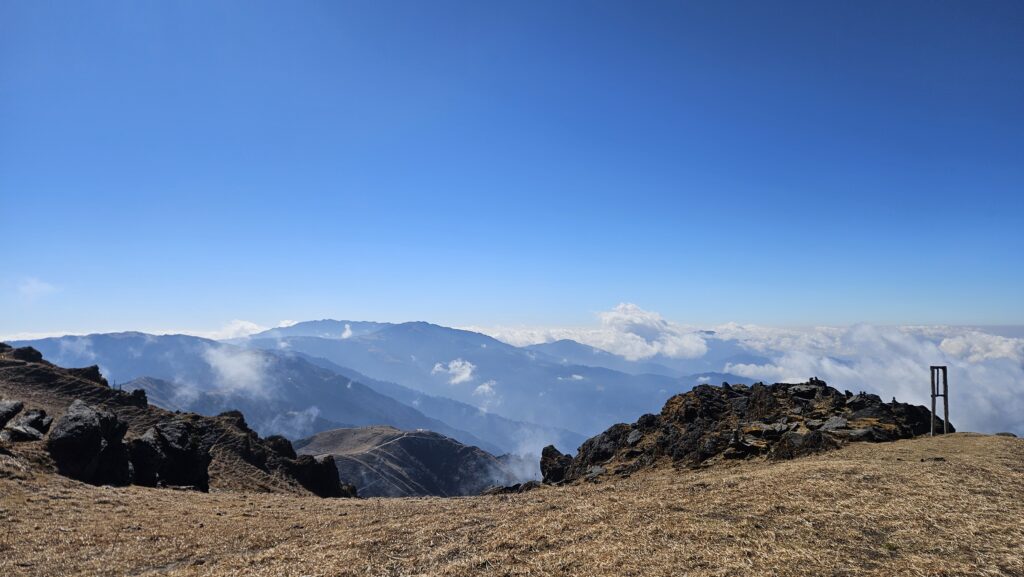
The grasslands had turned a muted brown under winter’s touch, with yaks grazing lazily, completely unfazed by our presence. We walked above the clouds, the world below hidden in white blankets — it genuinely felt like flying.
Confronting the mighty Everest Range
Standing face to face with the highest mountains on Earth is not something the mind processes easily. It humbles you instantly. Very few people get to witness that view in their lifetime — and realising that I was one of them was truly an amazing feeling.
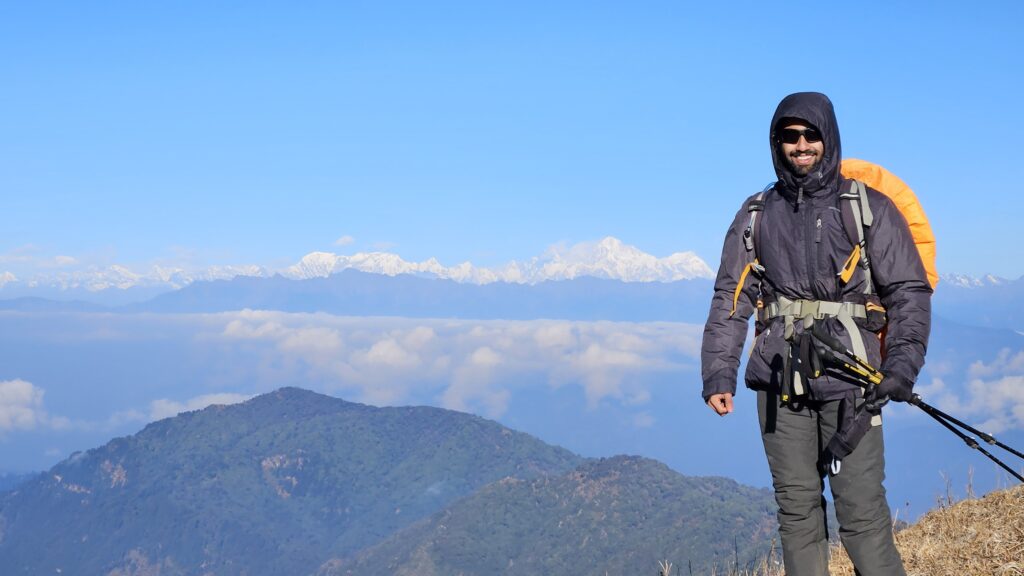
The trail to Phalut is fairly motorable, with occasional 4×4 vehicles navigating the route. We walked alongside it, carrying our packs until we reached the base area, from where we dropped our bags and walked another 700 metres to the Phalut summit.
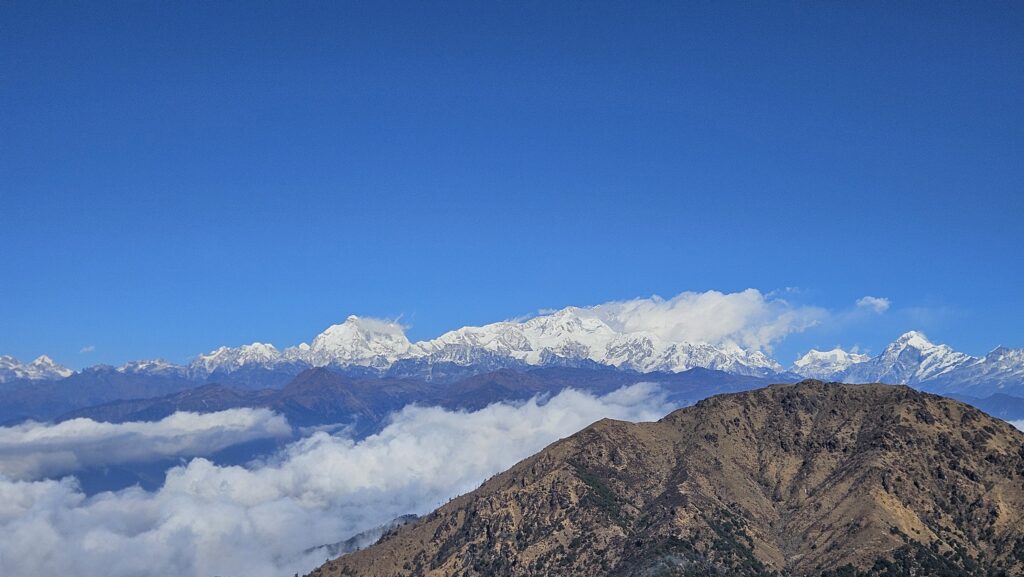
Phalut — locally known as Phalelung — sits right on the India–Nepal border and holds deep cultural and historical significance. Once a strategic point during British times, today it stands quietly as one of the most expansive viewpoints in the Eastern Himalayas, offering uninterrupted views of Kanchenjunga, Everest, Lhotse, and Makalu on clear days.
A windy summit
But the sense of accomplishment drowned everything else out.
I sat there quietly, staring at the Sleeping Buddha — closer than ever before. A memory flashed back from 2021, when I stood in Darjeeling with my family, wondering how people ever get close to these colossal snowy peaks. Back then, trekking wasn’t even part of my vocabulary. And now, here I was — sharing silence with Kanchenjunga itself.
Oh, how time flies.
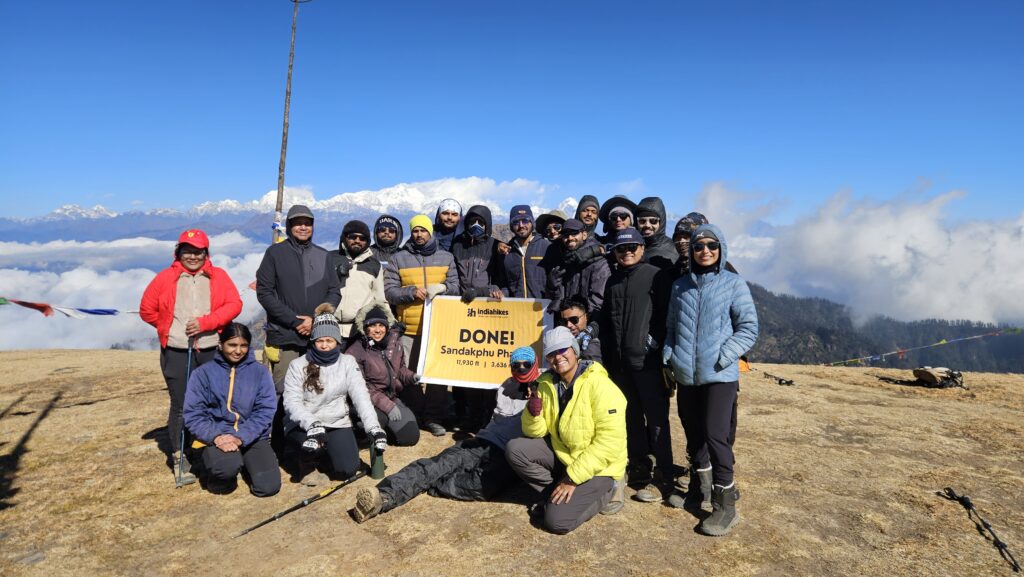
After summit photos and some quiet reflection, hunger finally caught up with us. We descended slightly to a teahouse at Phalut, where we had left our bags. Hot chai and steaming momo never tasted this good. Walking long distances at high altitude has a way of making even the simplest food feel like a feast.
Heading back to Sabargram
That walk back was slow and thoughtful. I spent most of it deep in conversation with a fellow trekker, talking about life, choices, fears, and everything in between. This — I realised — is what trekking truly offers. It strips life of noise, gives you time to reflect, and places you among people who carry wisdom shaped by experience.
The value of those conversations is priceless.
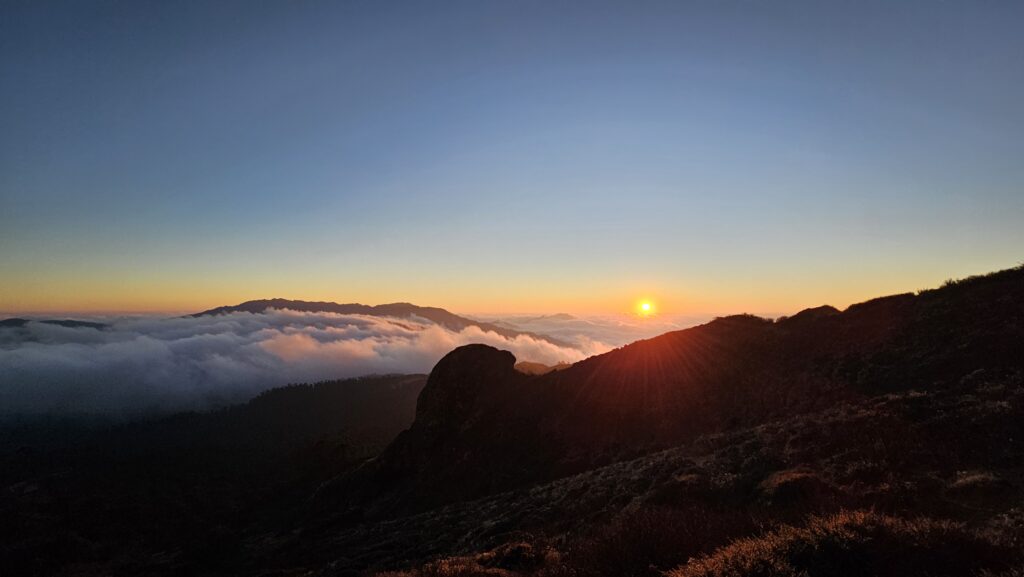
By the time we reached Sabargram, I was starving again. I grabbed a heavy snack and sat down just as golden hour wrapped the campsite in warm hues. Clouds floated in, tinted with sunset colours — the kind of magic that sneaks up on you quietly.
I caught the most unexpected sunset moment!
I noticed a faint ray of sunlight at the far end of the campsite. Confused — given how cloudy it was — I walked towards it. What I found left me speechless.
One of the most magical sunsets I had ever witnessed.
I shouted in excitement, calling everyone over. And together, we watched the sky explode in colours, the clouds glowing like embers.
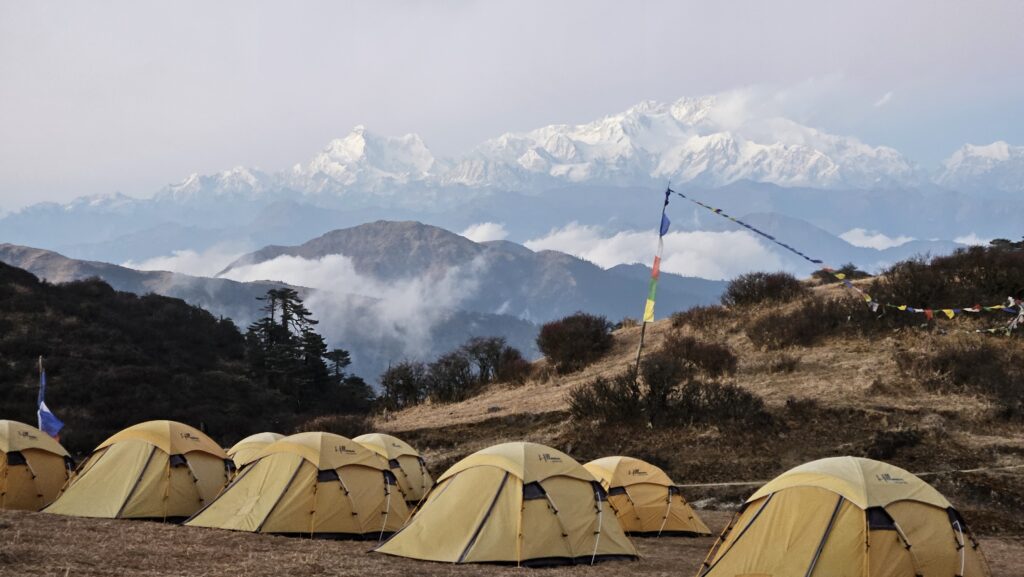
Just as we turned back towards our tents thinking it couldn’t get any better, the clouds covering the Sleeping Buddha cleared once more, revealing the entire range bathed in a soft pink glow.
What a way to end the day.
This day wasn’t just about distance or altitude. It was about manifestation, reflection, and deep gratitude. Months of dreaming had led to this — and every step, every doubt, every effort felt completely worth it.
I couldn’t have asked for more.
Day 4: Sabargram → Aal
The night at Sabargram was unforgiving.
Strong winds battered the campsite relentlessly, and with temperatures dipping below zero, sleep came in broken fragments. The tent fabric kept fluttering, the cold crept in no matter how tightly we layered up — and somewhere in the middle of the night, I realised that rest wasn’t coming easily.
A cold, windy sunrise
Just before dawn, I braved the wind to try and capture the night sky. I had hoped to shoot a timelapse of the stars slowly tracing their paths, but the wind had other plans. It was nearly impossible to keep my phone steady. Still, I managed to click a photograph — one that later, with a bit of editing, turned out better than I had expected. (I’ll let you decide how it turned out 😄)
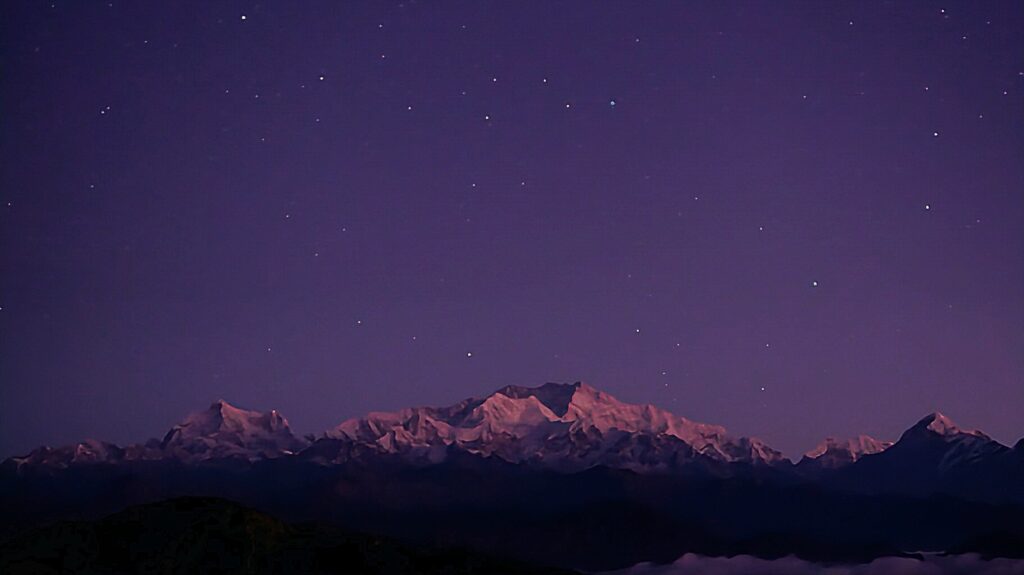
And then came the sunrise.
Today was different.
The sky was crystal clear — absolutely no clouds anywhere near the Sleeping Buddha. Seeing the entire Kanchenjunga range unobstructed felt unreal. After the drama of clouds and fleeting views over the past few days, this felt like the mountains giving us a rare gift. I stood there, soaking it in quietly, before heading back to camp to get ready.
The plan was to trek 12 kilometres to Aal, a small settlement inside Nepal, famously known for its breathtaking sunsets. On paper, the elevation gain looked minimal — but the trail had other ideas.
Unlike previous days, today’s route wasn’t particularly rewarding in terms of scenery. Much of it followed motorable dirt roads, kicking up dust that hung in the air, often swallowed by low-lying clouds. What made it harder was the constant up-and-down terrain. Short ascents followed by descents, again and again, demanding steady endurance and precise footwork.
By now, our bodies had already logged nearly 50 kilometres over the past three days. The legs felt heavy. Breathing required conscious effort. Every step needed intention.
Still, we moved.
Reaching Aal
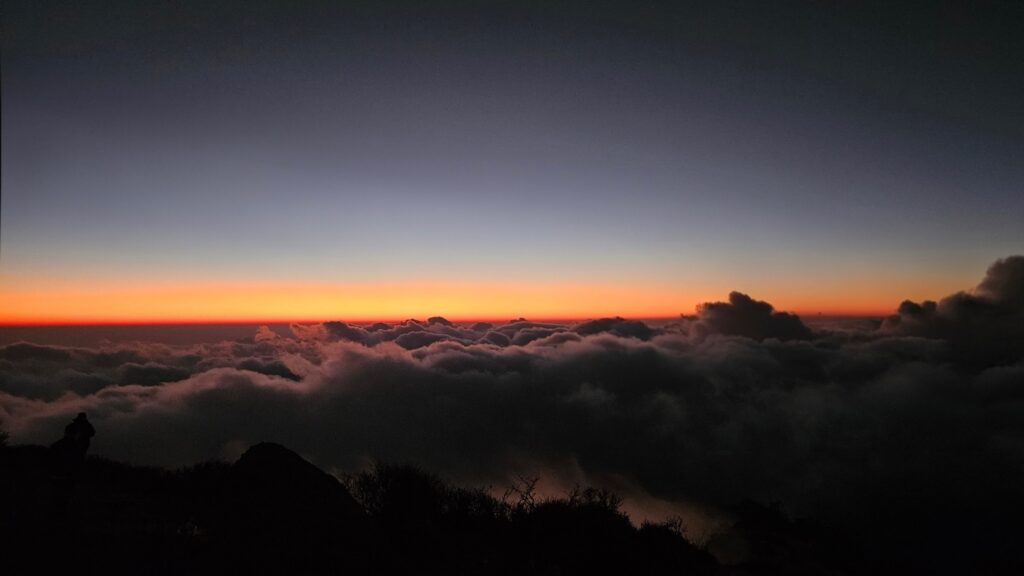
After nearly eight long hours of continuous walking, we finally reached Aal. The sunset we had been hoping for stayed hidden behind thick clouds — but the sky still painted itself in dramatic colours. Deep oranges, purples, and greys blended into a moody canvas that felt just as powerful in its own way.
The windiest and coldest night of my life
The wind howled endlessly, ripping warmth away from our bodies faster than we could generate it. Nothing worked — sitting close together, layers upon layers, bukharis blazing nearby — the cold found its way in regardless. The teahouse itself shook through the night, groaning under the pressure of the gusts as if it were barely holding on.
Sleep was scarce.
But that night taught me something important.
Not every day gives you dopamine. Not every day rewards you with views, sunsets, or highs. Some days are simply about showing up. Those are the days that test discipline — because motivation is fleeting, but discipline is what carries you forward when motivation disappears.
And in the long run, it’s discipline that quietly builds motivation all over again.
Day 5: Aal → Sandakphu → Gurdum
The morning at Aal felt kinder.
The winds had calmed down, the sky felt gentler, and for the first time in days, there was a sense of ease in the air. Before packing up, a few of us stepped out for a green-sweep around the campsite. Aal, being a popular tourist spot, was littered with trash—and seeing that up close felt heavy. It’s heartbreaking how easily we forget to care for places that give us so much in return. Each of us filled a bag, segregated the waste, and disposed of it responsibly. It felt like a small but meaningful way of giving back before leaving the mountains behind.
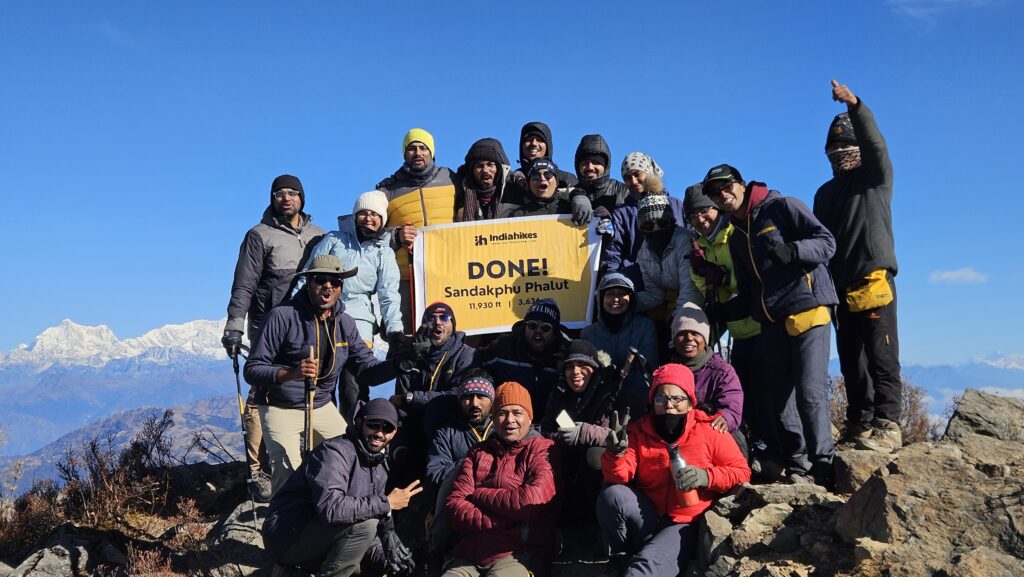
Today was a day of descent. But before that, one final summit awaited us—Sandakphu(locally known as Sandakpur), the highest point in West Bengal. The climb itself was short, barely a 100-meter ascent detour from our route.
A windy summit, yet again
There were hugs, smiles, congratulatory photos, and quiet moments of pride—but the peak was fiercely windy, so we didn’t linger for long. Soon enough, we began our descent, and just like that, we entered the treeline we had left behind days ago. The open ridges gave way to dense forests, and before we realised it, we were once again walking through the familiar, comforting greens of the Singalila National Park.
Time to reflect
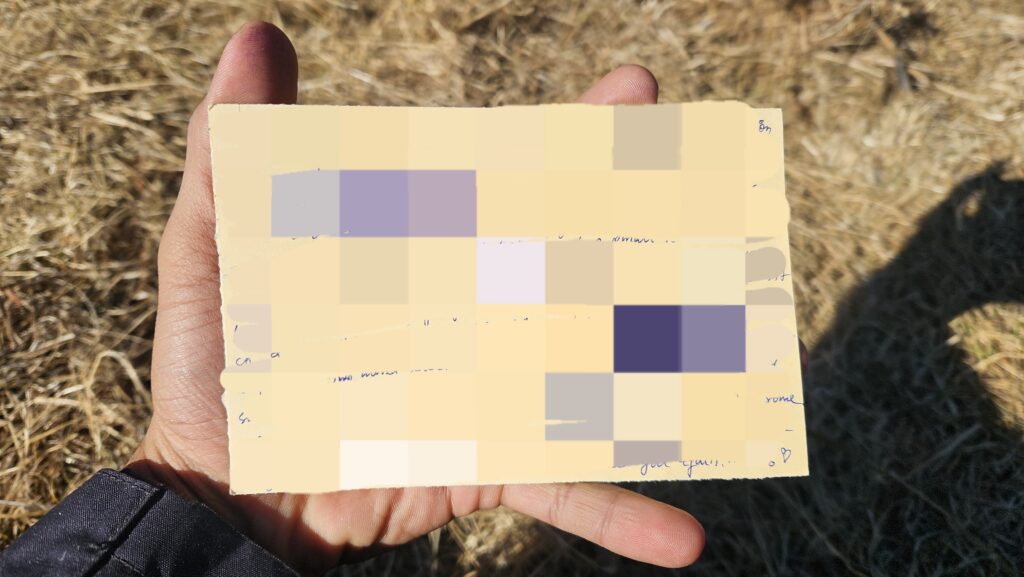
It was a steep descent. Halfway, we stopped for lunch at a Dhaba, right before entering the beautiful bamboo sections once again. After eating, our trek leader handed us postcards—and invited us to sit quietly and write. About anything. Everything. This has always been my favourite ritual on a trek. Putting words to everything you’ve felt over the past few days—fatigue, gratitude, fear, strength—helps you carry something deeper back home. Something you’ve discovered within yourself.
After that, we continued walking in silence.
A quiet walk. Each of us lost in our thoughts, reflecting, processing, slowly letting the trek settle into memory.
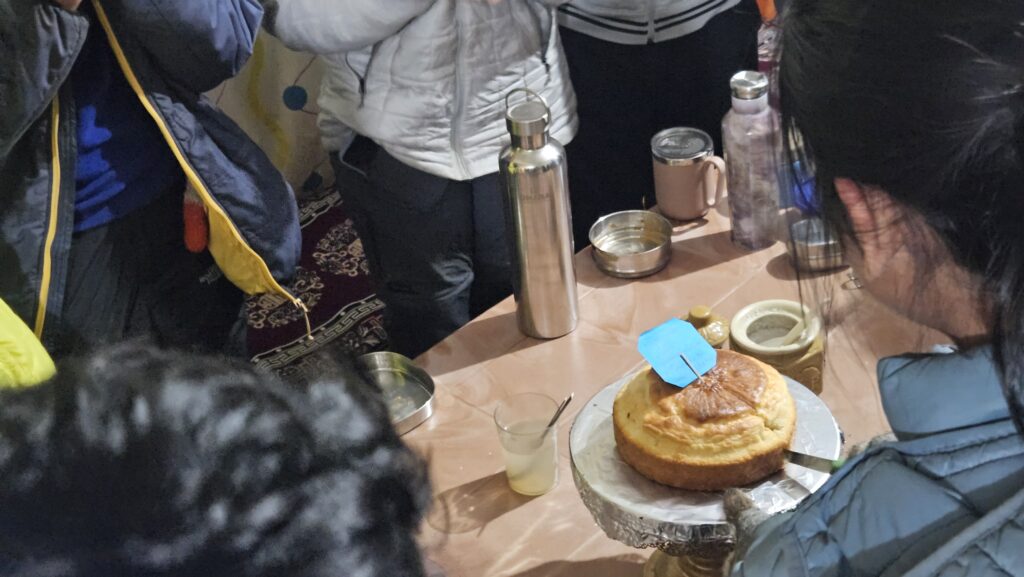
By evening, we finally reached Gurdum.
Warm rooms. Real beds. A cozy dining hall. It felt like a reward we had earned. The kitchen team welcomed us with hot samosas, cooked with so much love that they tasted better than anything I could remember eating. We sat together, laughing, talking about our journeys—how each of us experienced the trek differently, what we struggled with, what we learned. Listening to everyone reminded me how unique each person’s inner journey really is. The kitchen team also made a cake to celebrate the completion of our trek which was such a sweet gesture!
The night flowed easily—games, conversations, shared warmth.
After dinner, I didn’t wait long. Exhaustion finally caught up, and for the first time in days, I slipped into a deep, uninterrupted sleep—grateful, fulfilled, and quietly proud of everything we had just lived through.
Day 6: Gurdum → Sepi → Siliguri
The day had finally come.
It was time to leave the mountains and return to city life—and I felt both happy and heavy. Happy to go back to warm beds, familiar comforts, and routines we so easily take for granted. Sad because I was saying goodbye to the Himalayas, a place that had once again changed something deep within me.
The plan for the morning was simple: a 4 km descent from Gurdum to Sepi, followed by the drive back to Siliguri.
We said our final goodbyes to the staff at Gurdum—people who had quietly taken care of us after long, exhausting days. A few meters into the trail, we came across a beautiful mountain stream. We couldn’t resist stopping. Some of us stepped into the water, letting the icy, crystal-clear flow numb our tired feet. We clicked a few last pictures, laughed, soaked in the moment—and then, one final time, shouldered our bags and walked on.
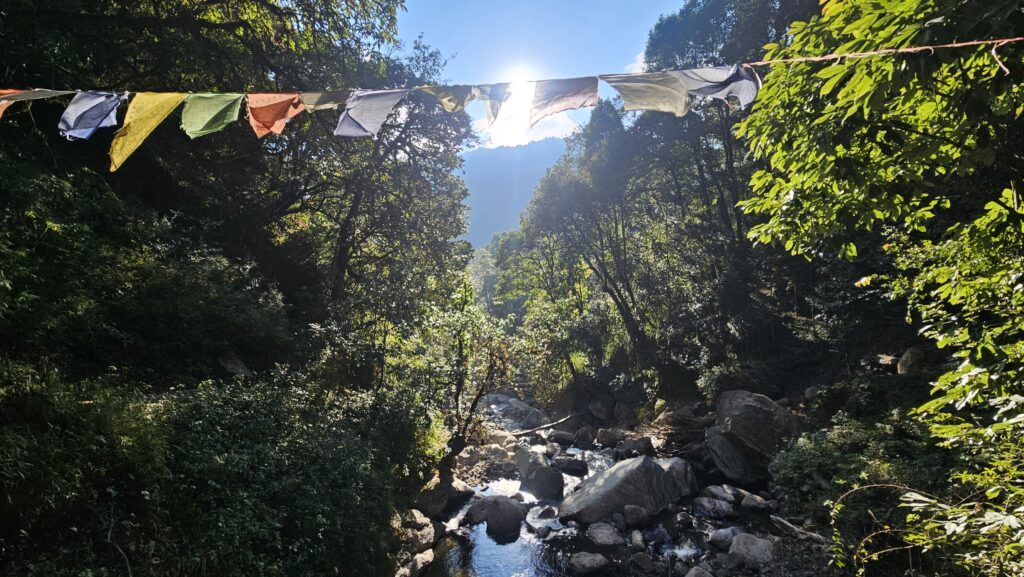
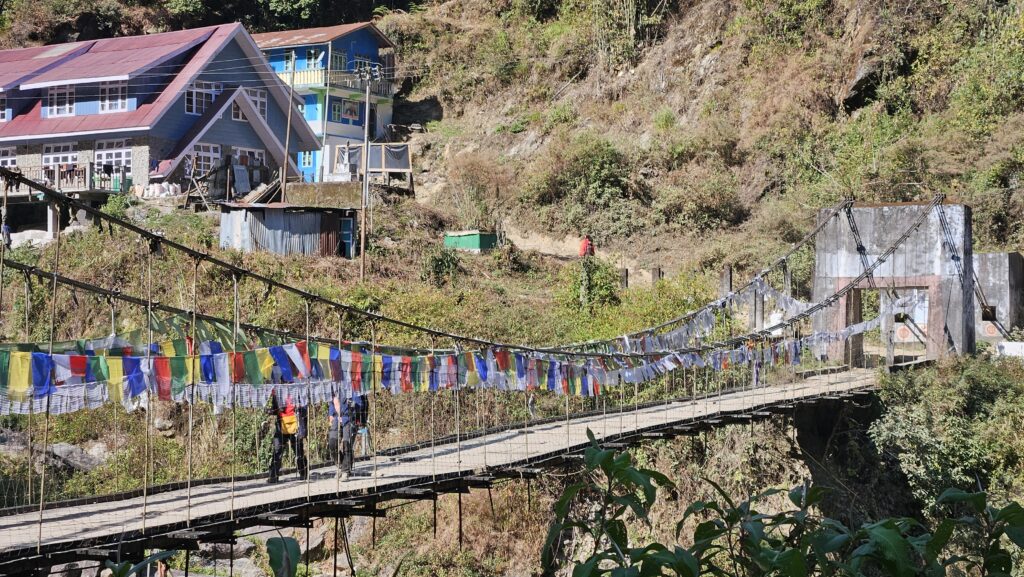
Soon enough, we hit the road.
As we crossed the Shrikhola bridge, something settled inside me. I knew I had done it. This trek had given me more than views or photographs—it gave me belief. Belief that I am capable of doing hard things. That the fears I had carried for so long didn’t define my limits. Somewhere along those 65 kilometers, I met a tougher, calmer, more confident version of myself—one that isn’t afraid to choose discomfort if it leads to growth.
Lost in these thoughts, I reached Sepi.
Within an hour, our bags were packed, documents signed off, and we sat down for a warm farewell lunch—one last shared meal before everyone dispersed back into their own lives. Soon after, we boarded our vehicle to Siliguri.
What am I taking back?
Somewhere between Sepi and Phalut, between discipline and discomfort, I realized this:
the hardest paths often lead you closer to who you really are.
As I walk back into city life, I carry more than memories. I carry Confidence. Gratitude. Clarity.
The mountains didn’t just challenge me.
They introduced me to a stronger version of myself.
And that’s why I’ll always keep coming back.
Last but not the least, a special note of gratitude to Vidya, the guides, and the entire Indiahikes team who made this journey possible in the safest and most thoughtful way. From sharing invaluable knowledge about the trail and the mountains to keeping spirits high with endless jokes and stories, they turned a challenging trek into an experience that felt both reassuring and deeply engaging. Their care, patience, and passion for the mountains truly shaped this journey—and I couldn’t have asked for a better team to walk these 65 kilometers with <3
You may also like
If stories of slow travel, mountains, and meaningful journeys resonate with you, you might enjoy these as well:
- Exploring Kinnaur — my experiences as I explored this remote corner of Himachal
- Bengaluru to Ooty Monsoon Ride — an adventurous ride through the valleys of the Nilgiris
- How I plan budget trips — practical tips for travellers
- Top weekend destinations from Bengaluru – if you are looking for a short getaway
- Workation from Bir-Billing – The dream workation experience
Also, do follow me on instagram to stay in touch!
Articulated your experience so beautifully 💗
Thank you!